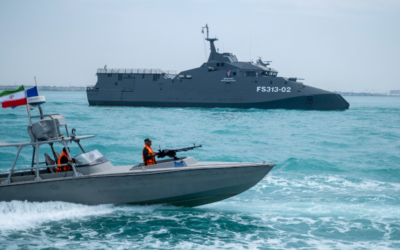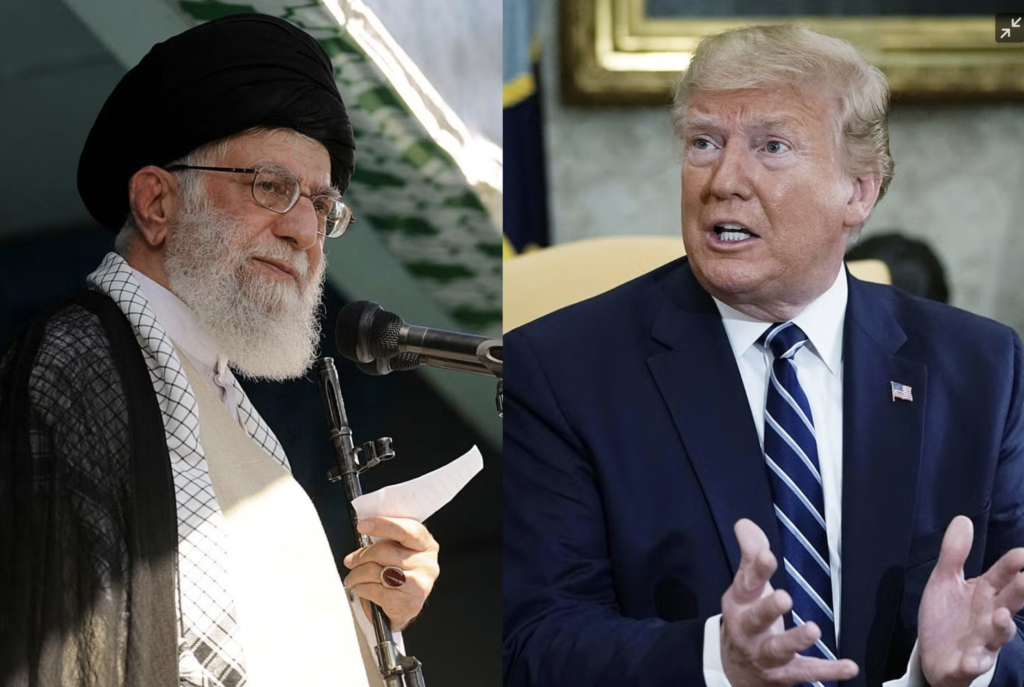
The global landscape of early 2026 functions less as a traditional political arrangement and more as a state of armed peace. The fragile stability from the traumatic aftermath of the June 2025 Twelve-Day War, which saw exchanges between Israel, https://www.iss.europa.eu/publications/briefs/israel-and-iran-brink-preventing-next-war supported by the United States, prevented the next war. This specific conflict was a terrible failure that effectively dismantled the legacy foundations of regional deterrence on which the previous arrangement was built. As an independent observer, we at Windear Global Consulting Firm see the current “Maximum Pressure 2.0” standoff not as a diplomatic spat but as a high-stakes stress on the physical and logistical infrastructure that supports global trade, which includes the systems and networks necessary for the movement of goods and services worldwide. https://www.focus-economics.com/blog/economic-impact-israel-war/
At the heart of this systemic vulnerability lies the Strait of Hormuz. It is one of the world’s most critical terminal chokepoints. This 33.8-kilometer (21-mile) wide passage handles 20 million barrels of oil daily. This passage handles approximately 20% of global petroleum consumption and a significant portion of the world’s liquefied natural gas (LNG). The Strait of Hormuz spatial geometry is inherently restrictive because it forces maritime traffic into narrow shipping lanes that create permanent bottlenecks within Iranian and Omani waters.
The Iranians have an arsenal purpose-built to exploit this geographic constraint with over 6,000 naval mines. Engineered to evade detection, these sophisticated mines pose a challenge to traditional naval clearance operations. While the U.S. military maintains the capacity to eventually restore flow, demining such a high-volume field could take months. In that interval, the global economy would essentially face a total system failure.
The ramifications of such a blockade would be both sudden and severe. While the headlines focus on the possibility of $120 or $150 Brent crude, the more telling micro fissures will be felt in the industrial foundations of China’s Shandong province. Independent refineries currently account for a quarter of China’s capacity and are heavily tied to Iranian crude, trading at a discount and below market rates. Should we remove this feedstock, the ensuing cost-push inflation will ripple through the manufacturing supply chain, akin to a thermal crack in a fragile structure. This dilemma is not just a Chinese problem because these refineries feed the global supply of petrochemicals and plastics. Assembly lines from Germany to Mexico will feel the vibrations of a price shock.
For the Gulf Cooperation Council (GCC) states, the situation represents an existential flaw. The massive investment in “Vision 2030” frameworks is to provide the necessary fiscal support for a post-oil economy. https://thearabweekly.com/gcc-closes-ranks-after-unprecedented-iranian-attacks. They remain dependent on energy revenues that rely on this single waterway in the interim. Whereas non-oil growth in the region reached a robust 3.8% of GDP in 2025, the fiscal foundations remain sensitive to energy price instability. The Kingdom is also entering the third phase of “Vision 2030,” and a sustained conflict in the region would likely trap the majority of its exports and significantly increase the fiscal deficit.
Iran’s internal deterioration has also amplified this instability. Large-scale demonstrations fueled by a water shortage and a devastating economic shift saw the rial’s market value plummet by nearly 45%. These events triggered a serious domestic crisis. For a regime facing internal collapse, eternal escalation becomes a desperate structural reinforcement strategy to consolidate nationalistic power.
Admittedly, the system has some built-in pressure valves. Diplomatic talks currently underway in Muscat, Oman, serve as a pressure-release mechanism to prevent slip-ups. Global standby production capacity of approximately 5.4 million barrels per day and strategic reserves provide a temporary buffer. The efficacy of these buffers, however, remains unproven in the face of a total blockade. These are soft fixes for hard problems.
Saudi Arabia’s East-West pipeline can only carry 5 million barrels per day, leaving 75% of the region’s total export hostage to the Strait of Hormuz. This lack of high-capacity alternative routes is the ultimate single point of failure in our global energy architecture. If tensions escalate further, the global economy would face supply-chain inflation, potentially slowing global growth and forcing central banks to raise interest rates aggressively.
The incredible cocktail of these factors will dictate the strategic behavior of major powers. The tension is no longer just a Middle East dispute. In 2026, it will be a key driver of a massive structural realignment among Washington, Beijing, and Moscow.
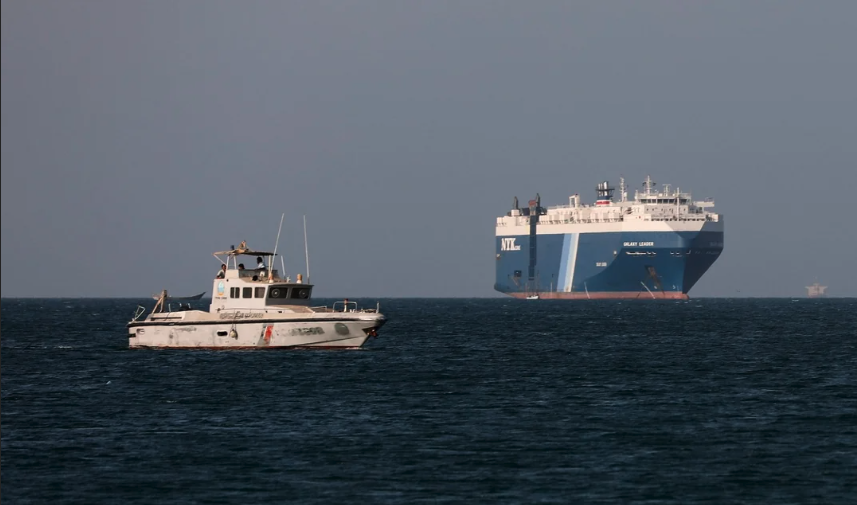
China remains snagged in the Hormuz trap. The math is inescapable. Beijing relies on the Persian Gulf for nearly half of its 13.2 million barrels per day of crude. To mitigate this dependence, China is effectively retrofitting Iran’s digital infrastructure by replacing Western tech stacks with secure Chinese technology. This move is intended to protect the regime from U.S. cyber capabilities. http://China remains snagged in the Hormuz trap. The math is inescapable. Beijing relies on the Persian Gulf for nearly half of its 13.2 million barrels per day of crude. To mitigate this dependence, China is effectively retrofitting Iran’s digital infrastructure by replacing Western tech stacks with secure Chinese technology. This move is intended to protect the regime from U.S. cyber capabilities (https://moderndiplomacy.eu/2026/01/13/chinas-dependence-on-iranian
Russia, meanwhile, treats this instability as an opportunistic second front, leveraging deepened intelligence and hardware transfers to ensure American resources are gutted in the Middle East, thereby weakening the security framework in Ukraine. These, among other factors, have diminished confidence in the dollar-based system, forcing investors to migrate toward hard assets. Gold prices recently surged past $5,300 before plunging by 9%.
The U.S. has pivoted toward what it calls “declarative realism.” Here, the United States is pressure-testing its alliances. The expectation is clear. Partners must increase their capacity and engage in greater burden-sharing. This change is a shift in the global security landscape and not just a policy tweak. The stability of the global system will depend on policymakers adapting the current system to be more resilient. This includes speeding up investments in renewable energy and diversifying supply chains away from single-point-of-failure chokepoints. This task requires more than just capital. It demands diplomatic frameworks that can survive periods of intense domestic and regional unrest.
Conclusion
The structural reality remains grim. Transparency and danger have replaced the old rules. A potential Hormuz shock would not be a transient event. It will force a permanent reorganization of energy trade toward overland routes and speed the shift toward digital sovereignty. The foundations of power in this evolving global landscape rest on the resilience of the networks that can survive the collapse of critical chokepoints. The Middle East is waiting for the next phase of escalation, while the world remains poised on a precarious balance (https://www.cbsnews.com/news/us-israel-attack-iran-world-reaction-to-war-middle-east/).