Europe’s Struggle to Support Ukraine While Managing Tensions with Russia
As Russia’s full-scale war in Ukraine extends into its fourth year, the European Union (EU) confronts the dual challenge of bolstering Ukraine’s defense while averting a deeper conflict with Moscow. Estimates from international organizations indicate that Russian forces occupy around one-fifth of Ukraine’s territory. The relentless destruction of infrastructure and mass displacement have complicated the EU’s policy agenda, driving debates over refugee management and border controls. Despite such pressures, European leaders reiterated their commitment to Ukrainian sovereignty, a position https://www.aljazeera.com/news/liveblog/2025/3/2/russia-ukraine-war-live-zelenskyy-to-attend-london-summit-after-trump-spat
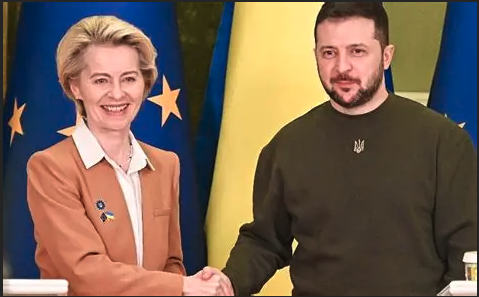
reaffirmed at a London summit in March 2025, where leaders from Germany, France, Italy, and other countries underscored their refusal to grant Moscow any concessions that would jeopardise Ukraine’s territorial integrity.
Ongoing Conflict and Humanitarian Consequences
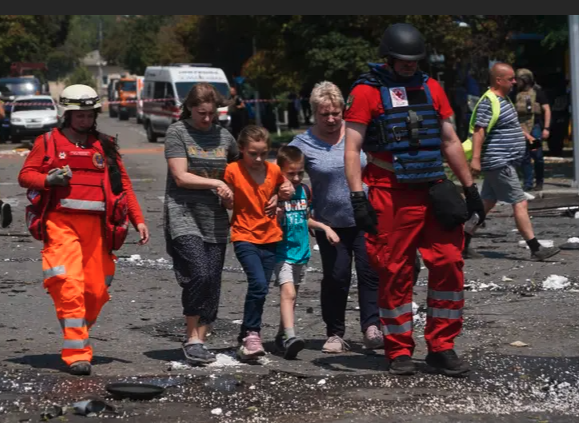
The consequences of Russia’s aggression have been profound. An estimated eight million Ukrainians are now refugees, having fled to neighboring countries and beyond. Countless towns lie in ruins, including major urban areas where civilian infrastructure has been decimated by shelling and airstrikes. This destruction has naturally diverted significant resources toward humanitarian relief, both for those still within Ukraine and for those seeking shelter throughout Europe. EU governments have struggled to strike a balance between providing emergency assistance and allocating funds to meet their own citizens’ economic needs. Public opinion within the EU continues to lean toward backing Ukraine, as many Europeans view the conflict as a direct test of democratic resilience and a defining challenge to Europe’s post–Cold War security architecture.
Europe’s Commitment to Ukraine
Since the Russian invasion began, EU member states have responded with a mixture of military aid, financial support, and diplomatic efforts. The impetus for this robust backing stems not only from solidarity with Ukraine but also from a broader strategic concern that ceding Ukrainian territory to Russia sets a dangerous precedent. Officials in Brussels warn that any Russian triumph would embolden the Kremlin to apply similar coercive tactics in other post-Soviet states, especially Moldova. Countries on NATO’s eastern flank, such as Poland and the Baltic nations, have been particularly vocal, urging the EU to maintain sanctions and strengthen Ukraine’s military capabilities. Despite occasional political disagreements over issues like arms deliveries and refugee quotas, a general consensus has emerged among EU leaders to continue assisting Ukraine. Surveys in key member states reveal that a majority of citizens believe upholding Ukraine’s independence aligns with Europe’s larger democratic values.
https://www.voanews.com/a/europe-begins-welcoming-ukrainian-refugees/6461723.html
Russia’s Strategic Calculus
Moscow has pursued a multifaceted strategy aimed at undermining EU solidarity. Observers note the regular use of cyberattacks, disinformation campaigns, and covert funding of Euro-skeptical or populist parties. The Kremlin’s messaging continues to revolve around the narrative of resisting NATO encroachment, a portrayal that seeks to legitimize its violation of Ukrainian sovereignty. Domestically, the Russian government underscores modest economic resilience despite sanctions. Official data suggests the Russian economy grew by 3 to 4 percent in 2023 and is projected to rise by another 2 to 3 percent in 2024. While these figures are lower than pre-war forecasts, Russian leaders highlight them to claim that Western penalties have been less crippling than anticipated. Nonetheless, Russia’s global position has weakened, forcing deeper ties with non-Western markets and compelling the diversion of state resources into a prolonged war of attrition.
Military Assistance and the Challenge of Defense Autonomy
European support for Ukraine has included arms shipments, training initiatives, and intelligence sharing. Countries such as Poland, the Czech Republic, and the Baltic states transferred significant volumes of small arms and ammunition. In contrast, others, under various bilateral or EU-sponsored agreements, provided heavier equipment such as tanks and air-defense units. However, analysts agree that Europe’s collective military assistance is overshadowed by the scale of U.S. contributions, which derive from a vast defense-industrial base. In part to reduce reliance on Washington, several EU governments have increased defense spending and embarked on projects meant to bolster Europe’s own industrial capacity. Defense experts argue that 2.5 percent or even 3 percent of GDP might be needed
https://www.dw.com/en/eurobonds-eu-plans-debt-revolution-to-finance-defense/a-71881746 for defense expenditures if the EU wishes to match American capabilities in surveillance, missile systems, and satellite coverage. A drive to create “defence Eurobonds” and scale up joint procurement programs has gained traction, though it remains politically controversial in capitals that hesitate to pool sovereignty in military affairs.
Economic Sanctions as a Tool—And a Risk
Shortly after Russia’s full-scale invasion, the EU imposed wide-ranging sanctions that significantly restricted Russian access to Western capital, technology, and markets. Brussels also froze an estimated €200 billion or more in Russian sovereign assets, representing roughly two-thirds of the Central Bank of Russia’s reserves held in Western jurisdictions. In principle, these measures serve multiple objectives, particularly deterring Moscow’s war financing and providing leverage in negotiations. Yet maintaining sanctions requires unanimous agreement among EU member states. Some countries, notably Hungary, have voiced skepticism about indefinite sanctions. A unilateral settlement between the United States and Russia could also undermine Europe’s efforts if certain EU members decide to lift their own restrictions. Should sanctions lapse, Moscow might reclaim its blocked assets, thereby regaining access to funds that could finance further aggression. The question of how to handle Russia’s immobilized reserves is especially urgent, given that Ukraine’s total war damages are estimated to be above $500 billion. Some propose using these frozen assets for reconstruction, while others advocate tying the funds to any potential diplomatic deal.

Diplomatic Challenges and the Precarious Equilibrium
Europe has displayed solidarity with Ukraine but still struggles to present a consistently unified diplomatic front. Differing threat perceptions—especially between frontline states like Poland or the Baltic countries and those geographically distant from Russia—breed disagreements over the extent of compromise in a possible peace plan. Major European powers such as Germany and France also seek to keep lines of communication with the Kremlin open to manage the risk of escalation. Meanwhile, the re-emergence of Donald Trump in the White House has introduced further uncertainty; Washington might scale back support for Ukraine unless Europe increases its financial commitments. European policymakers fear that a direct arrangement between Trump and Putin could sideline the EU and neglect fundamental concerns such as Russian troop withdrawals from occupied regions.
Balancing Deterrence and Diplomacy
EU leaders repeatedly argue for a “dual-track approach,” combining deterrence and dialogue. They contend that without a militarily prepared and politically resolute Europe, negotiations risk yielding an outcome that undercuts Ukrainian sovereignty. Security guarantees for
Ukraine—short of formal NATO membership—are frequently cited as a means to deter Russia. European leaders also insist that sanctions relief must be gradual and depend on verifiable commitments by Moscow to end hostilities and respect Ukraine’s borders.
Economic and Political Consequences for Europe
Russia’s reduced gas exports to Europe have forced a structural shift in European energy policy. Many countries now import liquefied natural gas (LNG) from alternative suppliers, invest in renewables, and accelerate energy transition programs. These moves have raised prices and prompted governments to spend heavily on subsidies. Simultaneously, Europe’s push to expand arms production has led to workforce shifts in some countries from automotive industries to defense. Defense budgets are rising: Germany committed to a €100 billion special defense fund, and other Central and Eastern European states plan to meet or surpass NATO’s 2 percent GDP guideline. These costs strain public spending at a time when inflation relief and post-pandemic recovery also demand resources.
Wider Ramifications for NATO and Global Security
NATO unity remains intact for now, but the alliance faces strains. Ambiguity in U.S. leadership has led several European nations to weigh options for greater strategic autonomy. Some observers underscore that a more robust EU defense pillar might rebalance burdens within NATO. Further afield, the war in Ukraine has brought broader global shifts into sharper relief. Weakened by sanctions, Russia is forging tighter relationships with China and looking to other non-Western markets. Meanwhile, the principle of sovereign borders in Europe is under direct challenge. Should the EU fail to uphold territorial integrity in Ukraine, other major powers might interpret it as a sign of weakness, with implications for global stability.
https://www.bruegel.org/analysis/defending-europe-without-us-first-estimates-what-needed
Diplomacy and Potential Compromises
A persistent concern is that a U.S.-Russian deal could marginalize European interests. American unpredictability heightens the need for the EU to define its bottom lines on issues such as borders, sanctions relief, and long-term security guarantees. Critics recall how earlier agreements failed to prevent further escalations in Ukraine, prompting calls for a stronger, more coherent European voice in any final arrangement. Many policymakers maintain that only verifiable proof of Russian compliance should trigger any meaningful lifting of sanctions.
Conclusion
Europe faces a test of both unity and strategic foresight. Although the EU’s combined economy is nearly ten times larger than Russia’s, harnessing that advantage to ensure Ukrainian security requires a cohesive and determined approach. Experts emphasize the necessity of retaining a credible sanctions mechanism and building autonomous defense capabilities while also extending a clear pathway for Ukraine to engage with EU institutions. Even in the event of a ceasefire, Russia’s robust military posture on Europe’s borders is unlikely to subside quickly. If EU governments manage to maintain coherence in sanctions and defense policy, and if they coordinate effectively with each other and with the United States, the prospects for safeguarding Ukraine’s sovereignty—and avoiding a wider conflagration—are far stronger.