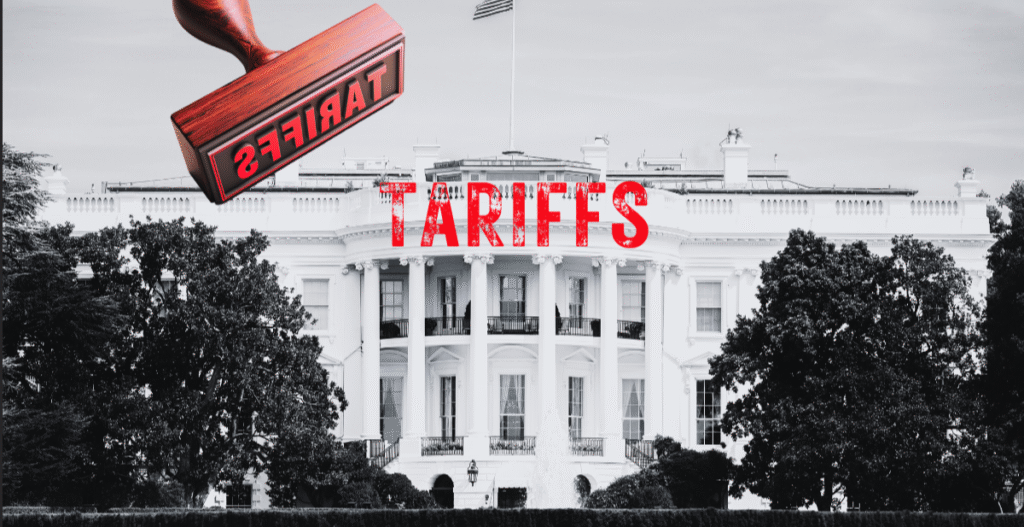
Two successive US tariffs on India—one on stalled trade talks and another on Russian oil—signal mounting pressure from Washington and a sharp downturn in a once-promising partnership.
There’s a reason why experts warn against thinking of states in human terms. While phrases such as “brotherly relations” and “time-tested allies” sound good, when the winds change, while human relations take time to erode, all those alliances, in the case of countries, stand for nothing in the blink of an eye. That, in a nutshell, seems to be what has happened between the US and India. When Narendra Modi stood beside Donald Trump at the White House in February, the moment was crafted to project confidence and camaraderie. Both leaders spoke of lifting bilateral trade to $500 billion by 2030, of a “mega partnership” that married Trump’s Make America Great Again to Modi’s own Make India Great Again. The symbolism was unmistakable: two economic nationalists, bound by shared populist instincts and a belief that their countries’ interests could be advanced in lockstep.
Barely six months later, that vision has curdled. In early August, the Trump administration imposed a 25 percent tariff on Indian imports after the two sides failed to conclude an interim trade deal before a self-imposed August 1 deadline. Days later, a second 25 percent duty was announced, https://www.bbc.com/news/articles/c15lqe7v302o explicitly tied to India’s continued purchases of Russian oil. By the end of the month, many Indian goods will face a combined tariff wall of 50 percent, which is the steepest the United States applies to any major Asian trading partner.
A Sudden Descent
The speed at which the US–India relationship has soured has caught both diplomats and markets off guard. Barely half a year ago, the prevailing mood was one of guarded optimism. Washington appeared willing to set aside its list of long-standing trade grievances, which included India’s entrenched protectionism in agriculture, its wariness toward loosening intellectual property rules, and its high tariff walls on everything from dairy to industrial machinery. The hope was that political goodwill could bridge the gap. The Modi government, for its part, was signalling flexibility. Offers were made to purchase more American energy and defence equipment, a move designed both to address the trade imbalance and to feed Trump’s narrative of “fair trade” wins for US producers.
But goodwill only goes so far when core domestic constituencies are in play. For New Delhi, agricultural access remains the most immovable red line. Farmers comprise over 40 percent of India’s workforce and form a politically powerful bloc that no government can afford to alienate. Loosening restrictions on genetically modified crops or on animal by-product feed would not just be an economic adjustment; it would ignite a cultural and political backlash in rural India. As one Indian trade negotiator said earlier this year, “No leader wants to be the one who tells 500 million farmers their livelihoods are on the table.”
The fifth round of talks, instead of narrowing the gap, exposed just how wide it remained. Without movement on agriculture, US negotiators saw no deal they could credibly sell to Congress or to domestic lobbies. In Trump’s calculus, the optics of toughness outweighed the optics of friendship — and so, on August 7, tariffs replaced diplomacy.
If the first tariff was an economic cudgel, the second was a geopolitical signal. Announced on August 6 and set to take effect on August 27, the extra 25 percent duty was justified under the International Emergency Economic Powers Act (IEEPA). This time, the stated target wasn’t trade imbalances but Russia’s war chest. By singling out India — the world’s second-largest buyer of Russian crude, which accounts for almost 40 percent of its oil imports — Washington sought to demonstrate that even partners would pay a price for undercutting US sanctions strategy. The message was clear: energy ties with Moscow were no longer a side note in the relationship; they were a litmus test of loyalty.
In New Delhi, the move was met with a mixture of frustration and disbelief. Officials noted that several European countries continue to import Russian energy when it serves their needs and that India’s purchases — often at steeply discounted rates — have helped temper global oil prices, a benefit not just to India but to consumers worldwide. The fact that other large buyers, such as China and Turkey, faced no comparable penalties sharpened the sense of being unfairly singled out.
The implications stretch beyond the immediate pain of higher tariffs. Economically, they risk pushing Indian exporters out of their most lucrative market, especially in labour-intensive sectors like textiles, jewellery, and seafood. Strategically, they inject a note of mistrust into a relationship that, for decades, has been built on the premise that differences can be managed without jeopardising the whole. And politically, they hand ammunition to Modi’s domestic critics, who argue that his much-vaunted personal rapport with world leaders has done little to shield India from the blunt force of American pressure.
What began as a breakdown in trade negotiations has now morphed into a broader test of India’s autonomy in foreign policy. It is also a reminder that economic disputes can rapidly become strategic confrontations in the current geopolitical climate.
The IEEPA Factor
The legal foundation for the second tariff lies in the International Emergency Economic Powers Act, a 1977 law that allows the US president to regulate commerce in response to an “unusual and extraordinary threat” to national security, foreign policy, or the economy. It has traditionally been used to freeze assets, block transactions, and impose sanctions against hostile states, terrorist organisations, or individuals tied to weapons proliferation.
Applying it to a major trading partner like India, and for a measure as sweeping as a blanket 25 percent tariff, is highly unusual. Trade lawyers note that IEEPA was never intended as a routine tariff tool. “This is sanctions law being stretched into trade policy,” says Daniel Price, a former White House economic adviser. “It blurs the line between economic coercion and commercial regulation, and that has both domestic and international consequences.”
Domestically, the move is already being challenged in US courts by industry groups that argue tariffs imposed under IEEPA bypass congressional authority over trade. If a court strikes down or narrows the president’s use of IEEPA for tariffs, it could set a precedent limiting the tool’s reach.
Internationally, the use of IEEPA in this way risks undermining World Trade
Organization norms. By framing the measure as a national security action linked to Russia, Washington shields it from normal WTO dispute procedures — a loophole other countries may be tempted to exploit. For India, the precedent is troubling: if energy policy can be grounds for sweeping tariffs, any policy divergence from Washington could in theory invite similar treatment.
Why Not China or Turkey?
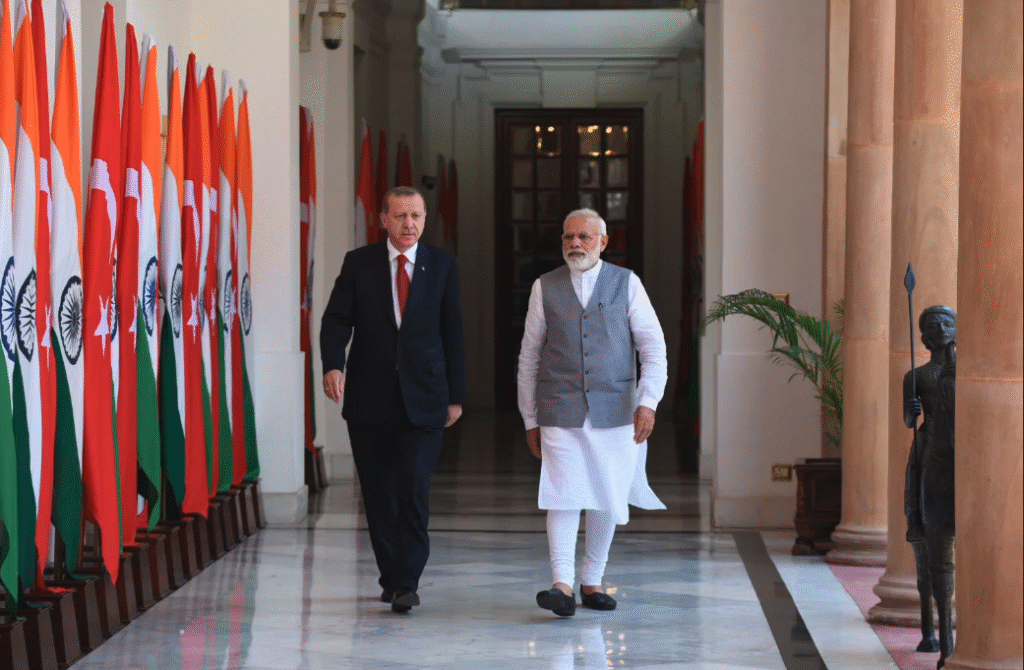
India’s frustration over the second tariff isn’t just about the cost, it’s about the company it keeps. New Delhi is the world’s second-largest buyer of Russian crude after China, and Turkey has also dramatically increased its purchases since the Ukraine war began. Yet neither faces the kind of blanket, punitive tariffs now aimed at India.
Part of the answer lies in US leverage. China is already locked in a deep trade and technology conflict with Washington, and any new, across-the-board tariff hike would risk further economic damage to US consumers and manufacturers dependent on Chinese supply chains. Turkey, meanwhile, is a NATO ally, and Washington has been working to keep Ankara aligned on issues from Black Sea grain exports to regional security — even as it grumbles about its ties to Moscow.
India, by contrast, has no formal alliance with the US, but it is deeply integrated into the American consumer market and counts the US as its top export destination. That makes tariffs a potent pressure point — and one Washington can use without sparking the kind of supply chain crisis a similar measure against China would trigger. As one senior US official told Reuters anonymously, “We know where we have leverage, and we’re using it.”
For New Delhi, the optics are damning: it is being punished in ways that bigger or more strategically indispensable partners are not. This feeds a long-standing Indian perception that its “special relationship” with Washington is conditional — and can be swiftly downgraded when US priorities shift.
Political and Economic Fallout
The double tariff blow lands hardest on India’s most exposed industries. The
United States buys roughly $87 billion worth of Indian goods each year, making it India’s largest export market. Nearly half of those shipments are in labour-intensive sectors like textiles, gems and jewellery, carpets, and seafood — industries that operate on tight margins and rely on predictable access to US consumers. A 50 percent tariff wall is more than a squeeze; it’s a deal-breaker for many exporters.
Trade associations warn that orders from American buyers are already being postponed or cancelled, with some retailers quietly shifting sourcing to
Bangladesh, Vietnam, and Thailand. In Tiruppur, Tamil Nadu — the hub of India’s knitwear industry — factory owners speak of bracing for “a winter without Christmas,” their shorthand for a lost US holiday season.
The broader economic ripple could be significant. Analysts at Goldman Sachs estimate the tariffs could shave 0.6–1 percentage points off India’s GDP growth in the coming year, largely through lost export earnings and weakened investor sentiment. A weaker rupee, higher borrowing costs for companies with dollar-denominated debt, and the risk of imported inflation if India reduces purchases of discounted Russian crude would add to the pressure. For a government already balancing subsidy commitments with fiscal discipline, the combination is unwelcome.
The political damage is no less acute. Modi has invested heavily in cultivating an image as a global dealmaker whose personal rapport with leaders like Trump could deliver tangible economic benefits. The tariffs puncture that narrative. Opposition leaders have seized on the reversal, mocking Modi as “Narendra Surrender” and accusing him of mishandling India’s most important strategic relationship. Even within the ruling Bharatiya Janata Party’s base, there are murmurs of discontent, particularly among nationalist groups who view the tariffs as a humiliation and proof that Washington cannot be trusted.
This domestic pressure comes at a delicate moment. Modi’s government has only a slim parliamentary majority after the last election, and the opposition senses an opening to cast doubt on his foreign policy competence ahead of key state polls. The perception that India is being coerced into adjusting its energy policy or market access undercuts the “strategic autonomy” brand that has been central to Modi’s diplomacy.
The mistrust now seeps into other areas of cooperation. While defence officials insist that intelligence sharing and joint exercises continue unaffected, procurement talks for major U.S.-made systems, including Stryker combat vehicles, Javelin anti-tank missiles, and Boeing P-8I reconnaissance aircraft, have been paused. Officially, both governments deny that the pause is retaliation. Unofficially, Indian officials acknowledge that the optics of signing billion-dollar defence contracts with Washington while facing punitive tariffs are politically toxic.
If prolonged, the risk is that an economic dispute could begin to erode the strategic alignment that has been the bedrock of US–India relations in the Indo-Pacific. For decades, the implicit bargain was that differences over trade could be managed so as not to derail security cooperation. The events of August 2025 suggest that the assumption may no longer hold.
Strategic Autonomy Tested
If the August tariffs were intended to force India into swift alignment with US policy, they may instead accelerate New Delhi’s instinct to hedge. The doctrine of strategic autonomy, which is a legacy of India’s Cold War–era non-alignment, has been a constant refrain in Modi’s foreign policy. It is a commitment to engage with all major powers, even those at odds with each other, while avoiding dependence on any single partner.
That doctrine has been on open display in the weeks following the tariff announcements. Modi is preparing to host Russian President Vladimir Putin in New Delhi, the first such visit since the February 2022 invasion of Ukraine. The symbolism will not be lost on Washington: despite pressure to reduce its reliance on Russian oil and arms, India will continue to engage Moscow on its own terms. During a trip to Moscow last week, National Security Adviser Ajit Doval underscored the point, describing the Russia–India partnership https://www.cnbc.com/2025/08/22/india-defies-us-tariffs-to-boost-russia-trade-putin-modi-trump.html as “old, strategic, and privileged” with a “very special role” in India’s security landscape.
Just days after Putin’s visit, Modi will travel to China for the Shanghai Cooperation Organisation summit. This will be his first trip there since the deadly 2020 border clashes in the Galwan Valley. Relations with Beijing remain tense, but the optics of Modi appearing alongside both Putin and Chinese President Xi Jinping in the same month remind Washington that India’s foreign policy options are broader than the US–India corridor alone.
Still, there are limits to how far this balancing can go. India has consistently presented itself as a “non-Western” power rather than an “anti-Western” one. It has no interest in joining any explicitly anti-U.S. or anti-Western initiative spearheaded by Moscow or Beijing. Modi’s phone call with Ukrainian President Volodymyr Zelenskyy earlier this week was carefully calibrated — signalling India’s willingness to be seen as constructive on Ukraine, without making commitments that would jeopardise Russian ties.
Trade diversification is another pillar of this recalibration. Negotiations for free trade agreements with the UK and the European Union have taken on new urgency.
Indian trade officials are also quietly exploring ways to expand market access in Southeast Asia, the Gulf, and Africa to reduce exposure to any one market’s political mood swings. If Washington hoped tariffs would narrow India’s economic field of vision, the effect so far has been the opposite.
For US policymakers, this moment is a test of priorities. India remains central to the Indo-Pacific strategy as a counterweight to China, a defence partner, and a technology collaborator. But the more transactional the relationship becomes, the less room there is for the quiet compromises that have, until now, kept trade disputes from spilling over into security and diplomatic arenas.
The Road Ahead
The trajectory of this dispute now hinges on variables that extend far beyond the corridors of New Delhi and Washington. The most immediate is the outcome of Trump’s planned meeting with Vladimir Putin in Alaska later this month. A ceasefire or peace framework in Ukraine could quickly remove the stated justification for the second 25 percent tariff, offering both sides an opportunity to declare victory and step back. If the talks fail, however, Washington is likely to hold its line and New Delhi will face the choice of absorbing the pain or recalibrating its energy policy.
Trade negotiations offer another possible off-ramp. A sixth round of talks is already scheduled for later this month, and officials on both sides insist the channels remain open. A limited agreement that perhaps carves out exemptions for specific sectors in exchange for targeted market access, could help break the deadlock. However, the political atmospheres are tricky: Modi cannot be seen at home as caving under US pressure, while Trump, gearing up for a re-election push, has little incentive to soften an image of toughness on trade.
In the meantime, India is likely to accelerate its diversification strategy. This means pushing harder on trade agreements with the UK and EU, courting markets in Southeast Asia and the Gulf, and deepening its role in supply chains that bypass traditional US–China routes. It also means making visible gestures toward Moscow and Beijing, not as an embrace, but as a reminder that India has options.
For Washington, the challenge is how to balance pressure with partnership. The US sees India as an indispensable player in the Indo-Pacific, but coercive economic measures risk alienating a partner whose cooperation cannot be taken for granted. As one senior Indian diplomat put it privately, “If we are treated like an adversary, we will behave like one, not because we want to, but because you will have left us no choice.”
The next few months will be decisive. Whether the double tariff becomes a footnote in an otherwise resilient partnership or the opening salvo in a longer period of mutual suspicion will depend on how deftly both capitals navigate the tangle of trade, energy, and geopolitics. What is clear is that the sheen of inevitability once surrounding the US–India strategic embrace has dulled. In its place is a relationship that will require more deliberate management if it is to withstand the strain.