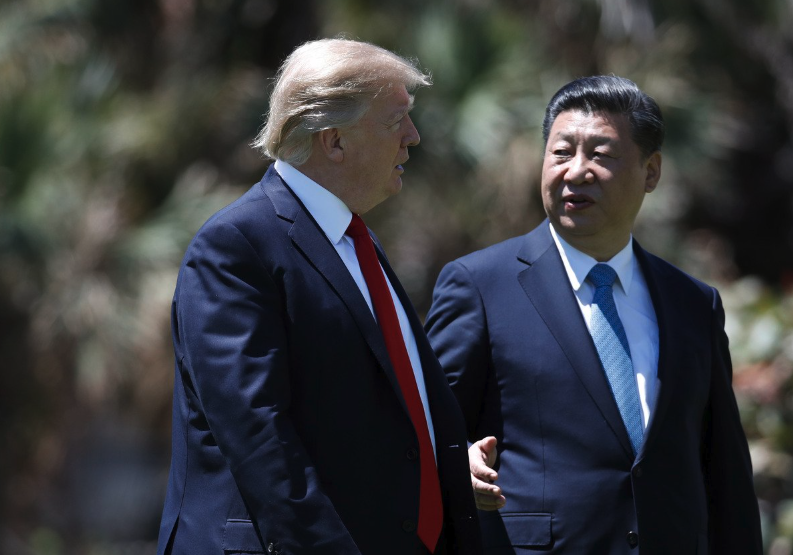
The world’s economic and political observers are focusing on Trump and Xi’s October 2025 meeting. This meeting is expected to readjust the global trade relations between the two powers. Washington and Beijing now exhibit the possibilities of economic romance, a hardheaded interest-driven relationship focusing on reassuring stability in a competitive relationship. The meeting between Trump and Xi might be a door opening that will lead to a new chapter of U.S.-China relations, one that will be https://www.bbc.com/news/live/cd7ry3x0nvet more focused on economic relations.
From Trade war to cautious cooperation
During Trump’s first presidency, the U.S.-China relationship crumbled, and the mutual friendship that began decades ago evolved into strategic https://www.nytimes.com/2018/07/05/business/china-us-trade-war-trump-tariffs.html competition in the mid-2010s. This led to a trade war through the imposition of tariffs on billions of dollars’ worth of goods.
The U.S. justified their actions on the basis of trade imbalances, intellectual property theft, and biased industrial subsidies. China’s revenge through targeting U.S. agricultural exports greatly affected the American farmers and had the highest percentage of rural economies. Perpetual confrontation becomes a recognized issue for both countries due to the great negative impact, either direct or indirect on their economies.
China’s export growth was slowed amid the global supply chain diversification, while the U.S. was confronted with enormous pressure in connection to higher export costs and disruptions in global logistics. Due to this, the two governments map out a quite diplomatic approach to reduce the artificial tensions.
Reuters, PBS, NewsHour, and the Guardian report that officials from both sides have already commenced negotiations towards preparing a framework, “Phase 1.5.” The objectives of the proposed framework are not about a comprehensive solution, but a strategic approach to balance and reset the interdependence relationship. The transition from economic enmity to cautious cooperation set the stage for the coming together of both Trump and Xi. A once-rivalry relationship is slowly taking a romantic approach based on the analyst’s view. This is not a sentimental connection but one bound with pragmatic necessity, a relationship that is characterized by both independence and mistrust. More or less, when a partner cannot live comfortably apart, the two economies are connected through trade, investment, and finance.
Strategically, both countries are engaging in competition, but they remain economically bound, a partnership that puts affection above calculation, an economic romantic relationship dictated by self-interest that self-interest.

Trump Expectation
Both economic logic and political strategy are parts of the overall expectation for President Trump and his administration, which is centered around four objectives.
1: Trade Deficit Reduction: More American goods need to be exported to China, specifically agricultural products such as soybeans, corn, and beef, in order to respond to the long-standing trade imbalance.
2: Technological Superiority Protection: Assurance against intellectual property violation and clear transparency during technological transfer are also more important parts of the deals. A situation where American intellectual property will be protected against theft.
3: Supply Chains: It is paramount for the U.S. to take over the semiconductors, batteries, electric vehicles, and defense components, which are critical sectors for superpower countries.
4: Symbolism of Domestic Politics: Trump’s domestic narrations lie in successful negotiation at the international level. This will strengthen his political legitimacy ahead of key legislative battles.
The above indicates that delivering political achievement at home while signaling economic strength abroad is a must-achieve agenda for President Trump.
What Xi hopes to achieve
With slow domestic growth, rapid youth unemployment, and international doubt about the Chinese economy’s transparency, all these are contributing factors that will shape President Xi’s decision. Also, Xi is strategically positioning Beijing’s needs, but logically applying a different approach with his objectives likely includes the following.
1: Tariff reduction: Mitigating the economic pressure on the manufacturing sector is a must-achieve objective for Beijing. This will alleviate the suffering of the sector and simultaneously create employment for the growing youth.
2: Accessibility to Technology: Export restrictions on advanced chips are a paramount objective for Xi at this point. This will allow China to maintain its position as one of the world’s technology powers.
3: Global Credibility: Reaffirming to the international community that China, as a country, can construct engagement is essential for Beijing.
4: Domestic Legitimacy: More importantly, to reinforce President Xi’s authority domestically, the president needs to demonstrate leadership strength and control in maintaining the U.S.-China relationship.
For Xi, it is important to balance between China’s sovereignty and securing pragmatic cooperation.
There is certainty that the meeting will readjust the direction of the global market and diplomatic engagement by either renewing the existing cooperation or continuing the rivalry between Washington and Beijing.
A slight positive sign can boost investors’ confidence, as indicated in the first steps towards collaboration, which have triggered positive market reactions in most of Asia’s major stock markets and the United States. A joint statement from Trump and Xi, highlighting mutual collaboration, could sustain this optimism and enhance market stability