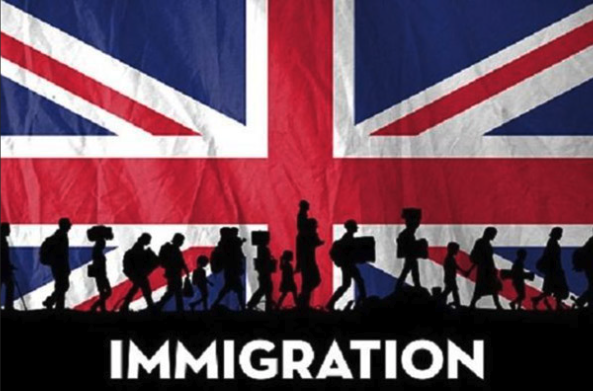
The United Kingdom and the United States, two leading democracies, recently reviewed their migration policies and are pursuing significant efforts to harden asylum and immigration rules. The UK announced a fundamental overhaul of asylum policies in November 2025, which would restructure the status of refugees into stages of temporary stay and extend the path to permanent residence to 20 years. Also in the United States, Washington announced a comprehensive review. The U.S. partially suspended particular asylum and visa processing following a brutal attack on the National Guard in Washington, linking the perpetrator to be among those awaiting the result of a refugee application. Responses from both nations signal policy priorities that emphasise domestic security, with consequences for migrants.
Policy design and stated rationale
The reform by the UK was seen as a broad “asylum and returns” package, which is to replace the present five-year route to Indefinite Leave to Remain (ILR) https://www.aljazeera.com/news/2025/11/16/uk-to-end-golden-ticket-for-asylum-seekers-in-huge-policy-overhaul for asylum seekers with the model of “earned settlement,” where the refugee is granted temporary stay and protection, which is renewed periodically; the successful renewal (effectively 20 years) would determine if an individual will qualify for the status of applying for permanent residence.
The UK government stated that the policy was intended for “order and control” over migrants and to promote equality through labour-market participation.
In the US, the decision to pause and review the process of asylum applicants and other related visa policy was publicly justified as a necessary national security measure based on the recent killing of two National Guard members in Washington and as a mechanism to prevent dangerous people from entering the country. This protocol includes stringent screening measures to ensure the public is protected against migrant-related security risks.

Political drivers behind the measures
Both policies aimed to reassure citizens that migrants’ public risks will be a thing of the past. In the UK, the reforms resulted from public debates about the number of small boats carrying migrants to the UK, and the issue was also politically salient, with politicians who appeared tough https://apnews.com/article/britain-uk-asylum-reform-denmark-refugee-mahmood-d680b1749238b336dc7b8c5063bf904f on the issue attracting public attention. According to some analysts, the timing of the policy and the rhetorical response to pressure within the electoral ecosystem, including coalition-building within political parties, focus on immigration control.
In the United States, the shift in policy was due to the recent security issue and a wide political atmosphere that continues to echo migrants as contributing factors to the crime rate within the country. The swift policy review, which suspended most of the previous administration’s immigration policies, reflected a political calculus that links immigration control to current public safety. Additionally, the measure reflects the possibility that a high-profile single act can accelerate administrative responses to policy review.
Policy Impacts on Migrants and Sending Countries
At the individual level, review of policy by the UK directly affected refugees or asylum seekers by denying them the extended temporality, reducing access to long-term rights (housing security, family reunification prospects, and social protection), and increasing the risk of social denial and labour market marginalisation, even if the person possesses formal work eligibility.
The media and a civil society group report that, already, most immigrants are abandoning essential benefits and reluctantly taking up some categories of work to maintain the prospect of settlement. This indicates an adverse behavioural response.
Immediate uncertainty for asylum seekers and for most in the diaspora who are awaiting family reunification or labour mobility—all these impacts are the direct consequence of the US immigration policy on immigrants. Additionally, the policy’s suspension of admissions from suspected countries would further complicate refugee settlement in the United States.
Viewing it from the other side of the simplicity assumption, the immigration policies of both the UK and the United States go beyond “keeping people out,” as they generate second-order effects in developed economies. Supply pressures might be the consequences for the labour market that depends on immigrant workers. Healthcare, social care, agriculture, and hospitality may be the first to experience the effects if the process of long-term residence is unduly prolonged or definitively blocked, which could increase recruitment and retention costs.
The entire policy package may provoke judicial challenges, humanitarian critiques, and reputational costs that could lead to diplomatic complications. Politically, a portion of the domestic electorate may be satisfied because they view the policies as a response to immediate migration issues.

Policies reviewed as solutions or political manoeuvres?
In the short term, the available evidence suggests that making refugee applications a lengthy process or prolonging the process of obtaining permanent resident status are blunt instruments for reducing immigration flows; the proposed structure does little to address the immigration problem https://www.bbc.com/news/articles/c3w9wlney23o . Conflict, climate impacts, and chronic poverty are the main drivers of migration.
The UK’s use of visa leverage against countries that reluctantly refused to be cooperative, pressuring some to accept returning migrants, illustrates how immigration policy has become a bargaining tool in international diplomacy. In the US, policies were used to expedite the suspension of admissions for nationals from certain countries, reflecting domestic political pressure and an approach that prioritises immediate security signalling over measured policy design.
The recent policy review is not only an indication of a gradual “end” of globalisation but also a sign of changing or redirecting social values. Immigration has always been used as an instrument to pressure the global distribution of labour, rights, and responsibilities. This approach revealed the state’s intent to reassert sovereign control over mobility, prioritising domestic political legitimacy and short-term security. Whether this is the beginning or the end of immigration solutions in the US and the UK depends on the trajectory. The ongoing policy review approach has demonstrated a pronounced shift toward a security- and politically responsive migration strategy, which will affect both migrants’ lives and the policy architecture of developed states for years to come.