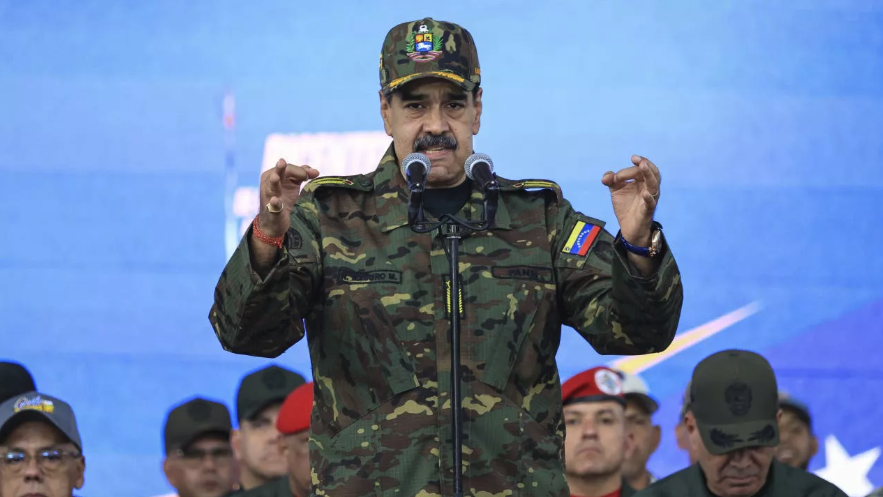
The inevitable end of President Nicolas Maduro’s tenure in power would present a complex crossroads in Venezuela’s contemporary https://www.nytimes.com/2026/01/03/world/americas/venezuela-maduro-capture-trump.html political landscape. For years, the country has experienced political divisions, economic collapse, the disintegration of its institutions, and isolation from the global community. A post-Maduro period would create opportunities and risks for a new democratic dispensation.
However, political stability or a new path to democratic consolidation is not assured by regime change alone; it is paramount to establish a framework for managing a complex transition amid weakened institutions, contested legitimacy, and deep social demoralisation.
Post-Maduro Transition Context
The prolonged Venezuelan crisis has been characterised by the concentration of executive power, the erosion of accountability, the politicisation of the judiciary, and a weakened opposition. There is a possibility that the path to a post-Maduro transition will arise from one of the following: a negotiated exit, elite fragmentation, or widespread political unrest combined with international intervention. Each of these would affect the transition differently, but they https://globalnews.ca/news/11613578/venezuelan-opposition-leader-high-stakes-visit-washington/ share institutional constraints.
The post-Maduro period would be marked by the unavailability of a strong, trusted state institution, as public confidence in governance institutions has been seriously threatened. Another destructive element is the power gap between executive and legislative authorities. Therefore, rebuilding institutional credibility among the populace would be an important factor in restoring constitutional order.
Major Institutional Challenge
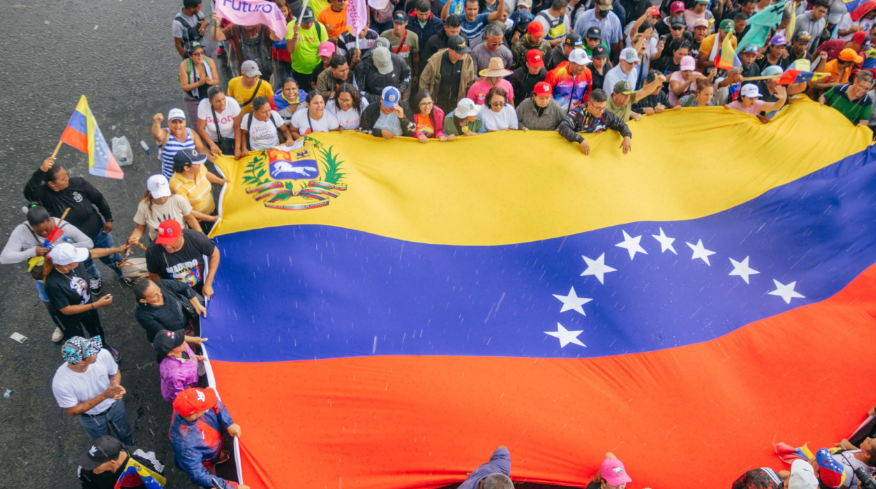
Determining who will be in charge of the state affairs will be one of the most immediate challenges during the transition. Legitimacy inadequacy will be an obstacle the interim government faces, particularly in a fragmented society https://www.msn.com/en-us/news/us/local-venezuelan-weighs-in-on-maduro-s-capture/ar-AA1TEjII?ocid=BingNewsVerp such as Venezuela’s. The nation will once again be confronted with competing interpretations of constitutional succession, a compromising institutional dilemma.
Enough attention must be paid to the populace; without citizens’ acceptance and international recognition, the transition system might struggle to maintain order in the country.
Legal clarity will be required to legitimize the inclusive political agreement and to set the election timeline. Negligence in taking adequate action could result in chaos among political elites.
The reconstruction of the electoral system is vital to ensuring an effective transition; free and credible elections are central to democratic restoration. However, the electoral institution in Venezuela has suffered greatly from politicalization and a lack of public trust. Therefore, institutional authority must be reconstituted, voter registries must be updated, and adequate access must be provided to both the media and international agencies; these approaches require both technical capacity and political consensus.
It will also be challenging to manage expectations due to the absence of a safeguard institution, which might reproduce instability, while unnecessary delay could destroy confidence in the transition; therefore, it is essential to balance urgency with credibility.
The military and security forces played a critical role during Maduro’s era, in which they benefited from economic privileges and political influence. During the transition process, their existence should not be overlooked to prevent military intervention, factionism, or resistance. At the same time, the security segment needs a structure to address accountability for past misuse of power, which must be approached carefully to prevent escalation that could undermine the transition process and harm the state.
At the time of Maduro’s loss of power, the judiciary and the rule of law had been seriously damaged, and these are obstacles to democratic consolidation. In the past, the court was instrumentalised to curb dissent and to legitimise executive actions; for this reason, restoring the rule of law would also require reforming the judiciary through vetting and constitutional safeguards.
It will not be easy to pursue accountability while maintaining political stability; the pathway to a consolidated democracy in Venezuela presents a dilemma. An aggressive punitive strategy might provoke anger among elites, while amnesties could undermine public trust; therefore, it is essential to adopt a legally grounded approach to balance the intended implementation.
On the whole, continuous years of crisis have widened both ideological ideas and undermined political parties. Venezuela without Maduro could magnify competition among different players seeking authority and political power.
In brief, polarisation could emerge in a new dimension if there is no proactive mechanism to enhance dialogue and power-sharing. Effective communication and power distribution structure are pathways to an inclusive political process that encompasses the whole society, regional actors, and marginalised groups. This strategy would be critical to the sustainability transition beyond the elite group.
Pathways to Consolidated Democracy
Despite all these challenges, there is hope for a consolidated democracy in Venezuela. It is vital at this juncture to establish a negotiation transition structure which will be used for negotiated settlement between vibrant actors(regime insiders) and opposition forces. This process should involve international actors that could help in formulating transition rules, including timelines for elections, guarantees of political participation, and security sector agreements.More importantly, such a negotiation process should prioritise transparency and encourage public communication to prevent perceptions of elite capture.
Gradual Institutional Process
A comprehensive reformation should be pursued sequentially; this step-by-step process will lead to institutional changes that could enhance stability. This gradual process will allow institutions to welcome reform while building public confidence.
In summary, Maduro’s term is over, but left a footprint for Venezuela’s. The question is how to eradicate his legacy and establish a new footprint for the country’s economic and democratic development without undermining citizens’s soverengthy.
List of Recommendations
- Provision of a constitutionally grounded transition, authorised with a clear mandate, limited duration, and extensive political inclusion.
- The electoral institution must be reformed prior to the national elections, and, to encourage transparency, there must be provisions for independent oversight and for international observation.
- The present security system must also be reformed in phases, prioritizing civilian safety and accountability for any infringement of civilian rights, regardless of who is responsible.
- Giving more independence to the judiciary through institutional reformation and a vetting mechanism.
- An inclusive national development dialogue should be encouraged, involving civil society, regional stakeholders, and political parties to reduce polarisation.
- A well-defined democratic journey that will leverage international technical and financial assistance for the national development.
Conclusion
The transition process in Venezuela, without Maduro in the picture, does not signal the end of the political dispensation but rather the beginning of a complex and uncertain journey. Demoralized institutions, a fragmented judiciary, and social polarisation pose a critical risk to a sustainable democracy. Although these challenges may impede national development, they can be addressed through negotiation, political arrangements, cautious institutional reform, and the establishment of a structure that accommodates all without discrimination at any level. Venezuela can establish a sustainable democratic framework. Arguably, the anticipated outcomes of the post-Maduro transition would not be built on leadership change alone, but on the collective capacity of all.