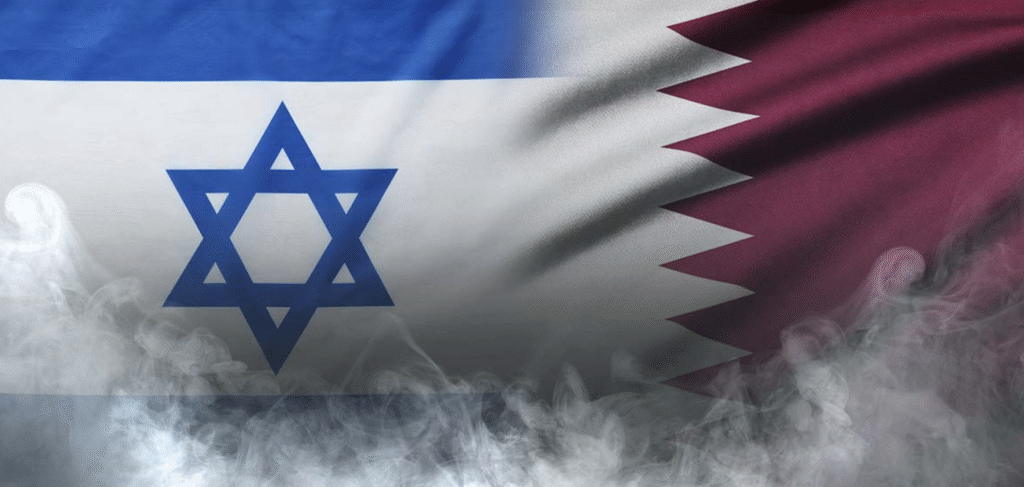
The unprecedented attack on Qatari soil may have rattled Hamas, but its real fallout lies in undermining U.S. credibility, straining Gulf security, and narrowing the path to peace.
History teaches us that history teaches us nothing. Those were the words attributed to German philosopher G.W.F. Hegel, who observed that humans and their governments rarely learn from past mistakes, leading to the repetition of historical errors. On September 9, those words could not have been truer as Israeli jets struck a Hamas meeting in Doha’s upscale Leqtaifiya district, shattering the calm of a Gulf capital more accustomed to diplomatic maneuvering than military fire. Hamas quickly declared that its top leaders had survived, though at least six people were reported killed, including relatives of senior figures. One official, Suhail al-Hindi, appeared on Al Jazeera to insist that the leadership was “safe and secure,” though the lack of other public appearances has raised questions about the extent of damage.
Whatever the tactical outcome, the political shockwaves have been immense. The attack was unprecedented: the first known Israeli strike on Qatari soil, in a state that hosts not only Hamas’s exiled leadership but also the U.S. military’s largest base in the Middle East. More than a decapitation attempt, the operation has forced a reckoning—about U.S. credibility, Gulf security, and whether the war in Gaza can remain geographically contained.
A Blow to Ceasefire Diplomacy
The strike came at a delicate moment. For weeks, Qatar, Egypt, and the United States had been shuttling proposals between Israel and Hamas in an effort to secure a ceasefire and the https://www.jpost.com/opinion/article-867430release of the remaining 48 hostages. Hamas had engaged with several drafts, rejecting demands for disarmament and exile but showing signs of flexibility on sequencing. Mediators believed they were close to building momentum.
Then came the bombs. Hamas said it had been reviewing the latest U.S.-backed proposal when the missiles struck. Within hours, Qatar’s prime minister denounced the attack as “state terrorism” and accused Israel of undermining the talks. For a moment, there was speculation that Doha would abandon its role altogether. But by the following day, officials clarified that Qatar would not walk away—mediation, they argued, was too important to let Israel dictate the terms.
Even so, the damage is clear. The strike disrupted an already fragile process, hardened Hamas’s reluctance to make concessions, and added political costs for any Arab state that might engage with Israel in the near term. At best, diplomacy will now move more slowly, with tougher conditions attached.
Washington’s Credibility on the Line
Perhaps the most immediate fallout is on U.S. credibility in the Gulf. White House press secretary Karoline Leavitt admitted that the U.S. military became aware of the strike only minutes before Israeli planes released their ordinance. President Donald Trump insisted he had no advance knowledge and described himself as “very unhappy” https://www.washingtonpost.com/world/2025/09/09/qatar-doha-explosion-israel-hamas/with the operation, adding, “We are not thrilled about the way that went down.”
For Gulf leaders, the details matter less than the perception: Washington failed to prevent an ally from striking another ally in the heart of the Gulf. That memory will echo alongside earlier episodes—most notably Trump’s slow response to the 2019 Houthi drone and missile attacks on Saudi oil facilities. For many in the region, the question is not whether the U.S. was complicit, but whether it can still guarantee their security.
This is the credibility trap Washington now faces. Gulf partners may quietly downgrade their trust in U.S. assurances if it does nothing. If it seeks to rein in Israel more visibly, it risks an open confrontation with Netanyahu’s government. Either path could mark a watershed in U.S.–Middle East relations.
Israel’s Calculus Seems Skewed Towards Violence
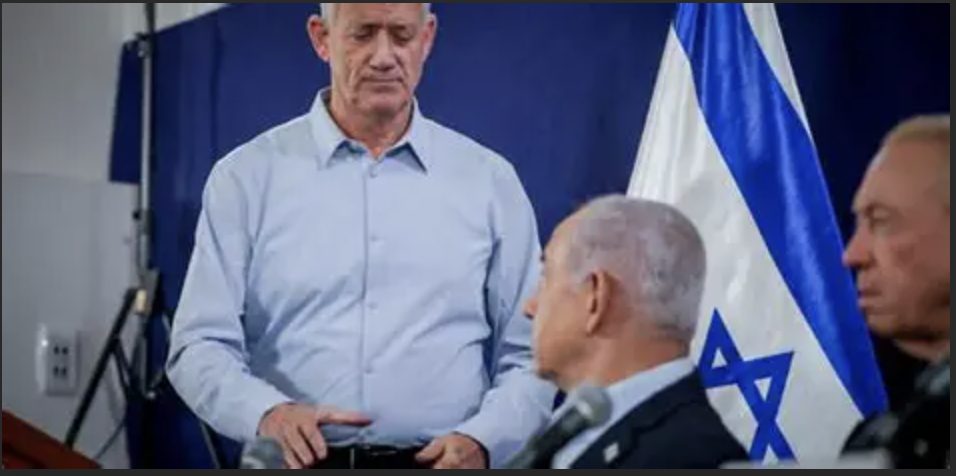
At a time when the block against Israel seems to be gaining followers rapidly, the question on every analyst’s mind would be: Why risk it? For Israel, the message was clear: Hamas leaders are not safe anywhere. By striking in Doha, Netanyahu’s government aimed to demonstrate strategic reach and deterrence, underscoring that sanctuary states will not shield militants from retribution.
The domestic political logic is equally powerful. With casualties mounting in Gaza and recent attacks inside Israel stoking public anger, Netanyahu needed to show decisive action. A bold or brazen strike in Qatar provides an optic boost, regardless of the ambiguous operational results.
Yet the gamble is double-edged. Instead of isolating Hamas, the operation risks isolating Israel itself. Already, Turkey, Russia, the United Nations, and several European governments have condemned the strike as a violation of international law. Even the United States, Israel’s closest ally, pointedly said the operation served neither U.S. nor Israeli interests.
If Netanyahu’s intent was to shore up domestic legitimacy, the price abroad could be steep: further erosion of Israel’s standing, suspension of any normalization tracks with Arab states, and deeper skepticism among partners who once viewed Israel as a potential security ally.
Hamas Remains Resilient but Rattled
For Hamas, the immediate narrative is one of survival. By insisting that its leaders were unharmed, it projects resilience and continuity at a moment of extreme vulnerability. But the reality is more complex. The strike revealed serious security gaps in Doha, a city that Hamas has long relied on for sanctuary. That alone will force the leadership to recalibrate—limiting travel, tightening communications, and dispersing command structures.
Those adjustments could slow decision-making precisely when rapid responses are needed for negotiations. While Hamas can claim symbolic victory by surviving, it must also weigh the costs: It cannot appear to negotiate from weakness, yet it risks losing ground if it rejects every compromise.
The U.S. proposal on the table, which suggests a 60-day ceasefire, immediate release of hostages, phased disarmament, and the establishment of a post-war Gaza administration, remains far from acceptable to Hamas. Still, the group has repeatedly signaled that it will not seek a role in post-war governance, a potential opening if mediators can construct a credible sequencing plan.
Qatar Has To Perform A Balancing Act
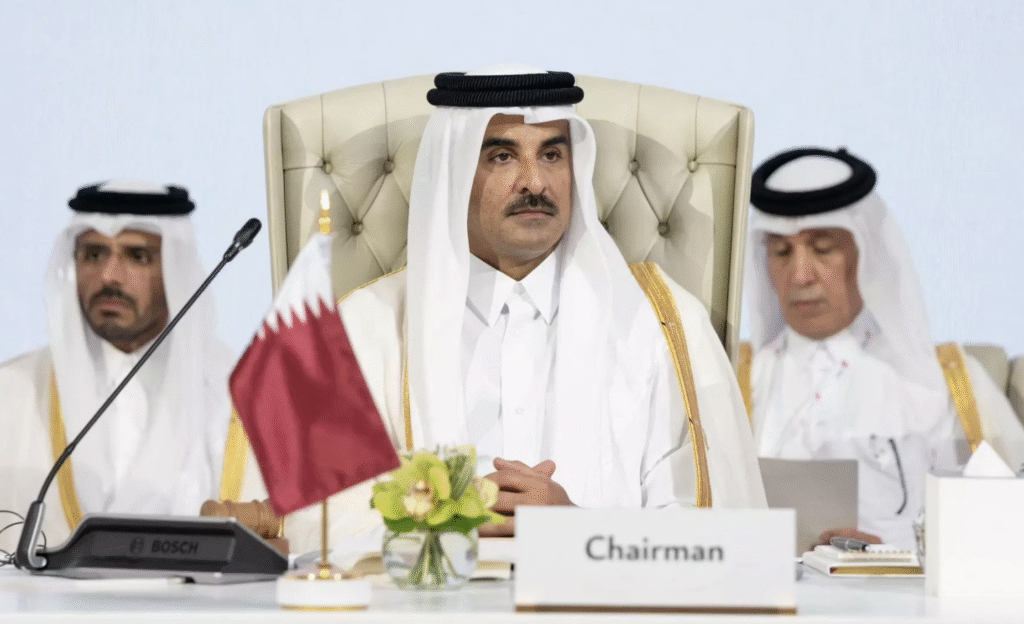
For Qatar, the strike is both a humiliation and an opportunity. Its sovereignty was violated, its role as mediator undermined, and its capital turned into a battlefield. At the same time, Doha has the chance to reassert its indispensability.
Expect Qatar to respond on two tracks: loudly, through public condemnations and appeals to international law; and quietly, by redoubling its mediation to show that no deal is possible without it. This has long been Qatar’s strategy—using crises to demonstrate leverage and build political capital.
But the risks are real. Hosting Hamas leaders has always been controversial; now, it has drawn fire onto Qatari soil. Domestic voices will ask whether the costs outweigh the benefits. Regionally, Gulf neighbors may question whether Qatar’s balancing act is destabilizing the neighborhood. How Doha manages those pressures will be a critical subplot in the months ahead.
The Legal and Normative Question
Beyond geopolitics lies the question of international law. Israel may argue that it acted in self-defense against a non-state actor plotting attacks. But striking on the territory of a third state without its consent, especially one not at war with Israel, sits uneasily with the UN Charter’s sovereignty rules. Early condemnations from the UN and European governments suggest Israel will struggle to justify the strike as proportionate or necessary.
This legal dimension matters because it feeds into Israel’s growing diplomatic isolation. The more its actions are framed as violations of international law, the harder it becomes for allies—even reluctant ones—to engage without political cost.
What Comes Next?
Several key dynamics will determine whether this strike is remembered as a turning point or just another episode in a long, grinding conflict.
- Washington’s “repair package.” The U.S. will likely push harder for a refined ceasefire-for-hostages framework, combined with a surge of humanitarian aid and a roadmap for post-war governance. Success would reassert U.S.
leadership; failure would deepen doubts about its relevance.
- Qatar’s calibrated retaliation. Expect legal démarches, UN initiatives, and public diplomacy rather than rupture with Washington. The partnership may stabilize if the U.S. visibly reaffirms Qatar’s mediation role.
- Israel’s next move. Officials have hinted at further operations if Hamas leaders remain at large. Additional extraterritorial strikes would normalize a dangerous precedent and accelerate Israel’s diplomatic isolation.
- Hamas’s decision-making. If leadership disperses, negotiations will slow. If it signals flexibility on hostages, a narrow diplomatic window could reopen.
A Strategic Gamble Whose Fallout Remains Anybody’s Guess.
The Doha strike encapsulates Israel’s current strategy: demonstrate reach and resolve, even at the cost of alienating allies. In the short term, it may shore up Netanyahu’s domestic standing and rattle Hamas’s leadership. But the long-term https://www.trtworld.com/article/9b20d4a6fbf2costs are significant, undermined diplomacy, shaken U.S. credibility, and a Gulf region now questioning whether Israel is a security partner or a liability.
Qatar’s challenge is to turn outrage into leverage and preserve its role as mediator. Washington’s credibility depends on regaining control of the peace process and convincing allies that it can restrain Israel when needed. If those steps falter, this strike will be remembered less as a blow against Hamas than as a watershed moment when regional norms collapsed further and the diplomatic space to end the Gaza war narrowed still more.