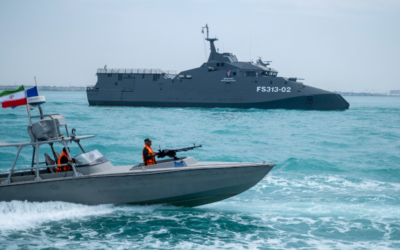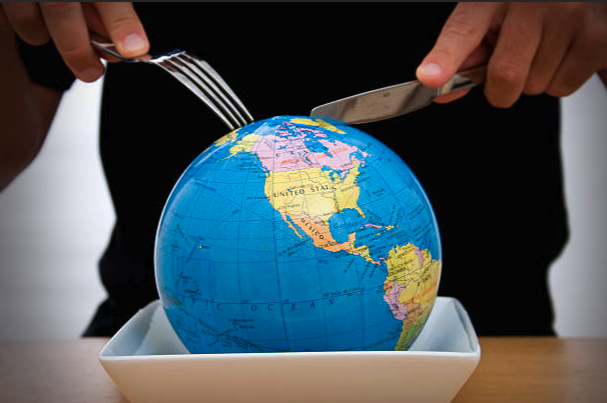
The broadening trajectory of global politics has been deeply impacted by the unfolding war between Israel and Gaza; this war has also ignited international debates beyond Middle East security but exposing a broader world insecurity loophole.
Several Western states, such as the United Kingdom, Canada, and Australia, for the first time in decades, have publicly recognised Palestine as a state. A step that shows a shift from the long-standing U.S.-led position of unequivocal support for Israel. This historical shift in https://timesofindia.indiatimes.com/home/sunday-times/all-that-matters/us-led-world-order-is-going-through-a-big-shift-and-that-is-a-good-thing-amitav-acharya/articleshow/120237316.cms international policy raises an extremely important question: “Are we witnessing an ideological division or pragmatic multipolarity in the international system?”
The Historical Lens: From Unipolarity to Fragmentation
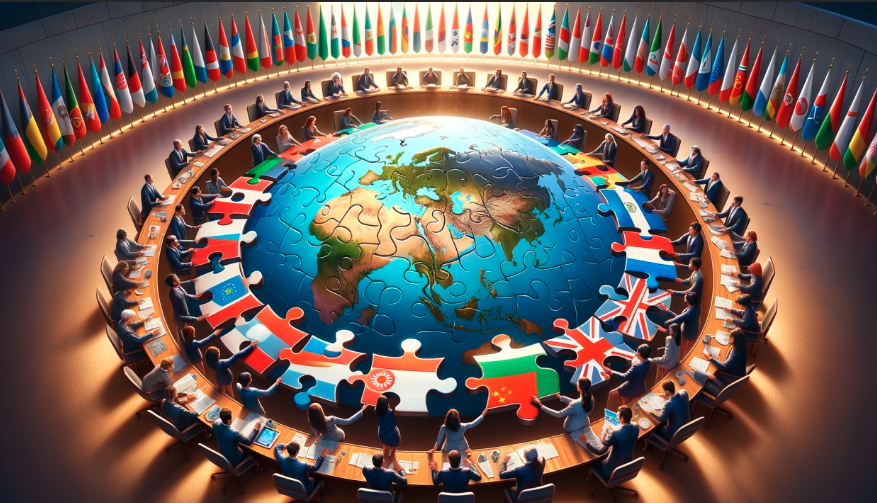
The United States has exercised hegemony in international affairs, influencing international politics, which has been going on since the end of the Cold War, and many scholars refer to the moment as “Unipolar Moment” and broader diplomatic alignments reflecting a unifying world view. Specifically, Western security, both in NATO and broader diplomatic circles, tends to enjoy a unified view of the world order. During this period, conflicts such as the Gulf War, the wars in the Balkans, and the war on terror demonstrate a unified transatlantic policy consensus.
Unfortunately, the Iraq War (2003) exposed the division gap that exists between European states, U.S policy, and global public opinion, which indicates a widening crack in the global consensus towards policy. More recently, the world witnessed differences in priorities https://www.reuters.com/breakingviews/shifting-world-order-suits-inbetweener-economies-2025-04-04/ between Western Europe, Eastern Europe, and the global south in responses towards Russia’s invasion of Ukraine. Now, the Israel-Gaza conflicts also highlight a new dimension in diversity that is beyond the regional level but that is also evolving onto the global stage.
Ideological Division: A clash of values
The recent development can be interpreted as meaning that we are exposed to an ideological split within the Western bloc itself. The firm alignment of the U.S. with Israel, where the United States’ policy prioritizes strategic and security considerations over public opinion. On the contrary, the Western states showcase a high level of sensitivity towards the humanitarian proportion of the war, especially in the scope of the destructive civilian cost in Gaza.
This suggests that the division that exists on the world stage is between a hardline security–centred world view and a humanitarian-centred world view. The former prioritises unconditional defense of allies even if it involves the application of military forces, while the latter places emphasis on human rights, self-determination, and international law. Such a division reflects the broader gap between realism and liberalism in international relations.
Acknowledgement of the Palestinian state by some Westerners reflects a liberal disposition towards norms, legitimacy, and the rule of law. While the U.S position on the issues echoes with realistic logic in which state security, alliances, and deterrence override decision-making.
Pragmatic Multipolarity: Realignment Beyond Ideology
Interpreting this development from another perspective indicates a less ideological division and more pragmatic multipolarity. Under this phenomenon, shared values are not only necessary to be abandoned, but instead, transforming their policies to manoeuvre a sophisticated and polarised global environment. A typical example is the sudden moral uprising, and more about the strategic position leading to the recognition of a Palestinian state.
The recognition of the growing influence of the global south in international forums by the Western middle powers. With more of Africa, Asia, and Latin America, empathy towards the Palestinian claim in accordance with the attitude may assist countries like the UK, Canada, and Australia to reinforce diplomatic ties and economic partnerships that are beyond the traditional U.S.-dominated world order.
In other words, the strategic decision in adjusting to a multipolar reality is not only a moral statement where the influence of Washington, Moscow, and Beijing is being challenged but also a sign of dissemination across multiple regional poles. Pragmatism, rather than ideology, could be the next key.
The Global South as a Strategic Factor
The revelation of the Global South’s determination as a unified voice as a result of the implications of the Israel-Gaza war and the double standard of the West, which is highly criticized by African, Asian, and Latin American states, particularly the disproportion between defending Ukraine‘s sovereignty against Russia’s aggression while ignoring Palestine’s aspirations to have an independent state under Israeli occupation.
Recognition of the Palestinian state by some Western states is part of the responsiveness to the critiques, whereby the West can anticipate rebuilding its integrity with the global south. Critically important at this juncture are the Global South’s strategies to replace the Western world order, when institutions like BRICS are busy expanding and promoting an alternate world order. For Western states anxious about enduring influence in a diversifying global system, modifying their position on Palestine may be less about abandoning the U.S. and more about marginalization.
The U.S Dilemma and the Future of Western Unity
The United States faces a serious predicament if indeed pragmatic multipolarity is the guiding logic. Washington risks isolation within its own alliance system if it proceeds with its relentless support for Israel. Unfortunately, a policy shift is unlikely because of domestic political realities, including the powerful influence of pro-Israel constituencies. These tensions raise crucial questions: Will allies, simply because of security, rally behind Washington in its global policies? Or will these policy shifts accumulate gradually, dissolving the continuity of Western alliances? Much will depend on the path of the war itself. The continuation of the war, plus rising civilian casualties, may establish the humanitarian arguments pushing more states to follow the UK and Canada.
Implications for the Emerging World Order
The Israel-Gaza war should therefore be visualised not only as a regional crisis but also as a test for global order transformation. Most of the implications can be that, firstly, Western consistency in international policy-making is coming to an end, where shared history, alliances, and economic benefits will not necessarily translate into policy unity. Secondly, the moral arguments are that humanitarian legitimacy is becoming strategically valuable not only for sympathetic reasons but also to rebuild relationships with the global south. Next, multipolarity is deepening due to the diffusion of the centre of power, where middle powers are experimenting with greater autonomy in foreign policy. Lastly, the U.S. faces credibility challenges. Washington struggles to maintain a balance between hegemony, which requires loyalty, and responsiveness to international humanitarian issues.
A Hybrid Moment
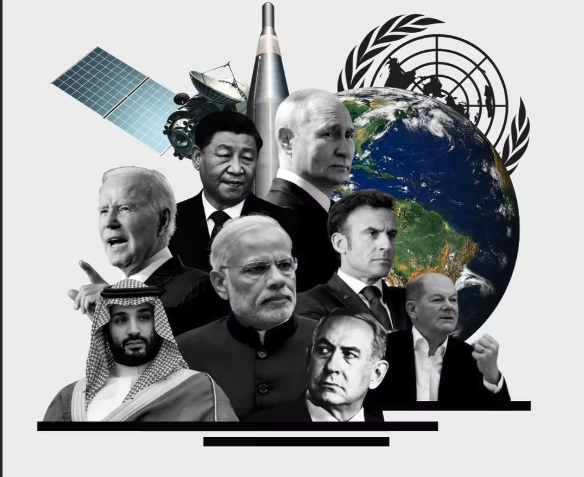
Arguably, the present situation mirrors both ideological division and pragmatic multipolarity. The ideological stand within the West is clear. Especially prioritising between security-first and humanitarian-first. However, most of the recent global behaviour exhibits the best explanation, showing direction evolving around pragmatism: negotiations are diversifying across different arenas in which state policies have to adopt a fragmented approach and consider a multipolar environment before implementing any policy. The world is now in a hybrid situation; the world order is not only splitting into competing ideologies, nor is it consolidating into balancing multipolarity. Instead, the globe is witnessing a hybrid moment of transition, where values, interests, and pragmatic conflicts come together.