Trump’s Gaza plan offers billions in aid and sweeping reforms, yet without legitimacy, inclusion, or trust, even the best-funded peace could crumble on contact with reality.
By now, most world leaders have come to recognize President Donald Trump’s declaration as a mixture of bluster and truth with varying ratios. So, when President Donald Trump unveiled his long-awaited peace plan for Gaza in September 2025, it arrived with the usual fanfare and a familiar dose of controversy. Announced as part of his broader Middle East “stabilization initiative,” the plan promised nothing less than the end of the Gaza war and the dawn of a new order: reconstruction, governance, and maybe, eventually, peace.
But beneath the triumphal language lay a set of uncomfortable realities. The plan was devised largely in consultation with Israel, with Prime Minister Benjamin Netanyahu reportedly briefed at every stage. Hamas, by contrast, had no seat at the table. Palestinian officials said they only saw the document after its publication.
To many in Gaza and across the Palestinian territories, that absence spoke volumes. The plan’s 20 principles, compressed into just three pages, prioritize Israel’s security interests while offering Palestinians only the vaguest promise of future autonomy. There is little reference to self-determination, https://www.bbc.com/news/articles/c70155nked7othe core grievance at the heart of the conflict for nearly eight decades.
“The plan reads like a security protocol, not a peace agreement,” one Palestinian academic told Al Jazeera. “It tells us who will guard the streets, but not who will represent the people.”
The Plan Seems Designed for Acceptance, Not Consensus
Trump’s proposal is designed to be acceptable to Israel, feasible for the United States, and tolerable for Arab states weary of endless war. It calls for an immediate ceasefire, the release of hostages, and the eventual withdrawal of Israeli forces from Gaza once a temporary international stabilization force can take over. Hamas, under the plan, must disarm and dissolve its political and military wings, effectively removing itself from Gaza’s administration.
The governance of Gaza would then transition to a “Board of Peace,” chaired by
Trump himself and composed of international and Palestinian technocrats. The Board would oversee reconstruction, deploy security forces, and guide the creation of a “new Gaza,” rebuilt through billions in donor funds.
This structure, part peace mission, part trusteeship, has no modern precedent. It borrows elements from the post-conflict reconstruction of Bosnia and Kosovo, but without the United Nations’ institutional backbone. Instead, it would operate under U.S. and allied oversight, assisted by international https://carnegieendowment.org/emissary/2025/10/gaza-peace-plan-implementation?lang=en figures such as former British Prime Minister Tony Blair.
The Plan Has Found Support
For all its flaws, the Trump plan has garnered broad political support. Nearly all major Arab governments, including Egypt, Jordan, and the Gulf states, have endorsed it in principle. Even Saudi Arabia, long cautious on Gaza diplomacy, has expressed conditional backing.https://www.bbc.com/news/articles/cm2elr16jjqo
That support brings not only political legitimacy but also economic firepower. The EU and several wealthy Islamic nations (excluding Iran) have signaled willingness to fund reconstruction and contribute personnel. Gulf states have reportedly pledged billions of dollars in investment, aiming to rebuild Gaza’s shattered infrastructure and integrate it into regional trade networks.
“This is the first time in years that so many countries agree on anything regarding Gaza,” a European diplomat told Reuters. “That alone gives the plan a momentum worth testing.”
Arab militaries, traditionally reluctant to deploy peacekeeping troops in Palestine, are also showing new willingness. Egypt, Jordan, and Morocco have discussed contributing to a stabilization force, though such deployment remains fraught with risk. The IDF would maintain security control until that force arrives, but the optics of continuity between Israeli troops and a U.S.-led mission could erode local trust before it begins.
A Plan Without a Partner
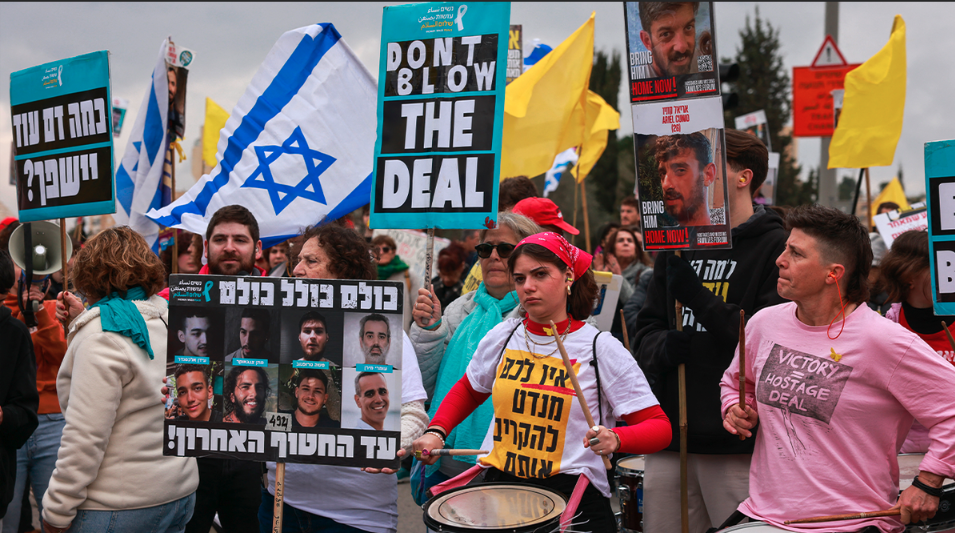
The largest missing piece remains Hamas itself. The group was neither consulted nor courted. Its leaders in Doha and elsewhere dismissed the plan as “political theater,” arguing that it ignores the root causes of the conflict. Still, under pressure from mediators, Hamas has not rejected it outright—an implicit acknowledgment that war fatigue is running deep.
Yet legitimacy cannot be forced. A ceasefire imposed without Palestinian participation risks repeating the mistakes of previous interventions. Even if Hamas’s fighters are disarmed, its political influence will persist. As analysts at the Carnegie Endowment note, “You can dissolve a militia, but you cannot erase an ideology overnight.”
The plan’s success, therefore, hinges on whether its architects can transform disarmament into political inclusion, perhaps through a restructured Palestinian Authority or new local councils that allow representation without re-militarization. So far, that piece of the puzzle remains unaddressed.
Building Peace Without a Template
Beyond politics, the practical challenges are immense. Creating a multinational stabilization mission from scratch typically takes months, sometimes years.
Mandates must be defined, command structures negotiated, rules of engagement clarified, and personnel assembled.
However, Trump’s plan calls for the immediate deployment of an international force and a civil administration, bypassing UN mechanisms altogether. “There is no template for what’s being proposed here,” notes a Chatham House commentary. “It’s a peace mission designed without the institutional scaffolding that normally prevents collapse.”
Even if Arab states provide troops, coordinating them under a single non-UN authority poses formidable logistical hurdles. Questions of jurisdiction, accountability, and human rights oversight loom large. If Israeli forces remain until the mission is ready, that continuity could brand the operation as a foreign occupation by another name.
Who Will Govern Gaza?
Rebuilding civilian governance may prove even harder than maintaining security. Gaza’s administrative structure, decimated by war, is staffed largely by civil servants tied to Hamas or its affiliates. Removing them wholesale would render essential services paralyzed. Keeping them risks undermining the promise of a
“new Gaza.”
The plan envisions training a new, untainted police and security force under international supervision. Yet as Iraq and Afghanistan demonstrated, building competent, trusted local forces takes years, not weeks. Until then, international troops would bear the brunt of policing duties, a role that invites friction and resentment.
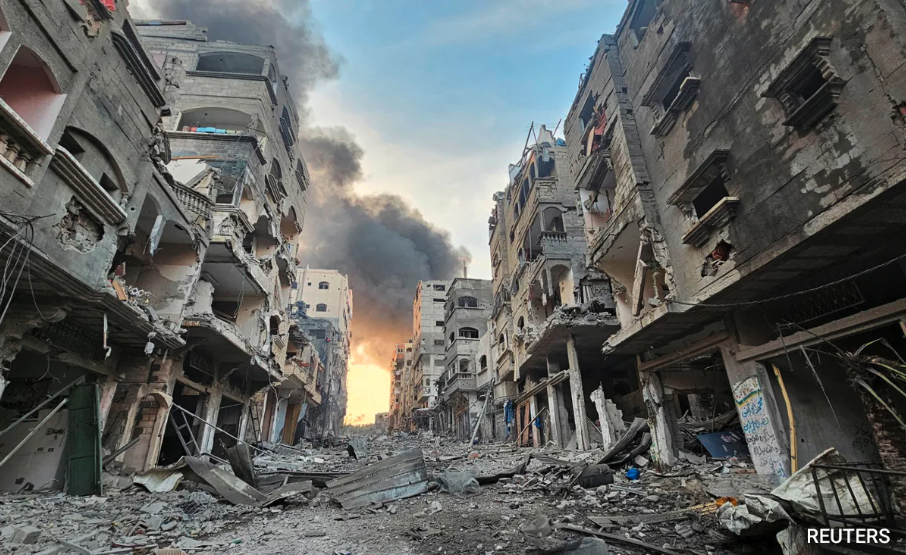
Meanwhile, the “Board of Peace” would oversee reconstruction, but it is unclear how it will interact with existing Palestinian institutions, or how decisions on aid distribution will be made. Gaza’s infrastructure has been reduced to rubble. The ability to deliver electricity, clean water, and medical care within months will determine whether the population views the plan as liberation or occupation in disguise.
Follow the Money
Economic reconstruction is at the heart of Trump’s proposal. The plan promises rapid development: housing projects, power grids, new ports, and an eventual “Gaza Economic Zone” designed to attract investment. Yet where vast sums flow, corruption follows.
Billions will be spent, and inevitably, that can lead to even more billions being siphoned off. Without transparency and local ownership, reconstruction risks enriching contractors rather than citizens. “If Gazans see cranes but not jobs, roads but not rights, the plan will fail,” wrote Foreign Policy in a recent analysis.
Trump’s team insists that a panel of international experts will monitor every dollar. But in hsi second term, he hasn’t had a good track record in terms of living up to his words, and trust is in short supply. The memory of earlier U.S.-brokered initiatives that overpromised and underdelivered still lingers, from the “Deal of the Century” to the post-Oslo years.
The Political Endgame
What the plan lacks most is a credible endgame. It gestures toward “eventual Palestinian self-governance,” but avoids any mention of a sovereign state. For Israel, that omission is reassuring; for Palestinians, it is existential.
Arab governments have publicly endorsed the plan but privately express unease that it sidesteps the two-state question altogether. “No peace will last without a vision of statehood,” said one Gulf foreign minister quoted by The Financial Times. “Without it, you are only managing a conflict, not resolving it.”
The Biden administration’s earlier frameworks at least recognized that reality. Trump’s version echoes the same logic but strips away the diplomatic caution, casting reconstruction as a substitute for political rights. It’s an approach that might buy calm, but not necessarily peace.
A Narrow Path Forward
For all its flaws, the Trump peace plan remains the only viable option. It has the one thing so many previous initiatives lacked: momentum. There is money on the table, the backing of major regional powers, and a rare, if uneasy, alignment of interests from Washington to Riyadh. On paper, it promises everything Gaza has long been denied: an end to the fighting, open borders, and the slow work of rebuilding lives from the rubble.
But turning paper into peace will demand an almost impossible choreography. Hamas must agree to disarm without feeling erased from the political map. Israel must learn to loosen its grip, to withdraw in stages and accept a measure of Palestinian self-rule. Donor nations must keep the money flowing even when optimism fades and progress stalls. And the United States, so often the architect of grand openings and abrupt exits, will have to stay long after the cameras leave.
It is, by any measure, a tall order. And for an administration that thrives on speed, spectacle, and the illusion of instant success, patience may prove to be the rarest resource of all.
Conclusion
The Trump peace plan for Gaza is bold, unconventional, and deeply risky. It is less a roadmap than a wager that enough exhaustion and external pressure can produce a new order by fiat.
If it works, it could transform Gaza from a symbol of despair into a laboratory for regional reconstruction and renewed diplomacy. If it fails, it will join a long line of grand designs that collapsed under the weight of their own contradictions.
For now, the plan remains suspended between vision and illusion: a document rich in ambition but poor in legitimacy. In the long run, Gaza’s future will depend less on Trump’s boardrooms or Netanyahu’s security calculus than on whether
Palestinians themselves are finally granted a say in the peace made in their name.