There has been a big shift in diplomacy. The UK and 27 other countries have publicly denounced the Israeli government’s activities for its ongoing military operations in Gaza, most importantly, because of the humanitarian situation, which is continuously getting worse without a sign of ending soon. The criticism at the time was not what the world had seen before, coming from Western countries, which historically provided unlimited support or stayed neutral towards Israel’s actions,
THE GAZA CRISIS
The GAZA Strip has seen a significant level of destruction since the escalation of the conflict that erupted in October 2023, with reports of tens of thousands dead and numerous casualties.
The destruction extends beyond the dead and casualties, but with the inclusion of extensive destruction of numerous infrastructures like schools, hospitals and shelters.
At the centre of this is an eminent disastrous humanitarian catastrophe, estimated more than a million people have been negatively affected, either displaced or at risk of starving, and the United Nations has issued a statement warning of imminent famine if there is no improvement plan.
Children are dying from insufficient food, pregnant women are delivering without adequate medical care from professional health care, and families depend on garbage for survival. All these have been reported by the World Food Programme (WFP) and other international organisations. Additionally, some international organisations, including the press, have been complaining about the level of restriction imposed by the Israeli government, subsequently denying them access to the real situation and simultaneously damaging logistics.
Undoubtedly, these and more have drawn growing international attention to critically look into Israel’s military operations in Gaza.
FROM SILENCE TO CONDEMNATION
The UK and a few EU countries have shied away from publicly condemning Israel. This is the norm as far as history can tell. The geopolitical relationship, historical duties, and respective internal political issues within most of these countries partially contributed to the reluctant public scrutiny of the Israeli military actions in Gaza.
In light of this, persistent military operations happening in highly populated areas have attracted the attention of the West. The death toll in Gaza has surpassed 40,000, with more than 70% reported to have been women and children, that was as of mid-2025, according to the international organisations’ report. Moreover, the circulation of graphic images and videos of real-life humanitarian conditions has bypassed traditional media gatekeeping, forcing governments to respond to public opinion.
There is an increase in the number of donor countries, promising more aid due to the condemnation and the under fire for categorizing them as accomplices for negligence.
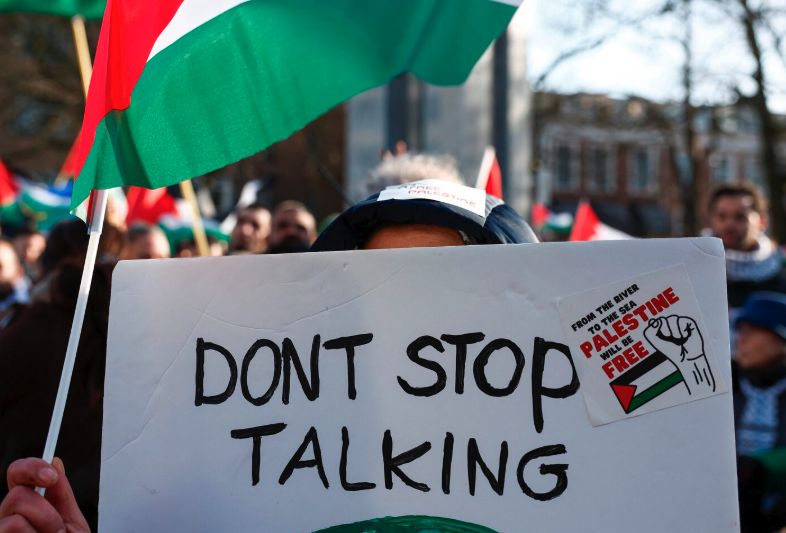
The influence of public pressure also affected the approach of politicians around the world, specifically when having related conversations about war in Gaza. Non-stop pro-Palestinian protests in London, Paris, Brussels, and other cities urging their governments to take proactive steps towards what is happening in Gaza. The International Criminal Court (ICC) and the International Court of Justice (ICJ) are both looking into the possibility of war crimes. This legal action has forced countries that have signed international humanitarian conventions to clarify their positions. Also, Human Rights Watch and Amnesty International have said Israel’s military action is against the Geneva Convention and can be regarded as collective punishment., as more countries in the global south with prominent Muslim majorities unite towards a common goal about the Gaza Strip, Western powers have started thinking about the cost of being on the other side of history.
Consequences of the Joint Condemnation
The West has proven its stance by publicly condemning Israel’s military action in Gaza. The inclusion of official charges at the UN, lower-level diplomatic relations, and all sides urging a swift ceasefire. Evidence and legal help by the ICJ are opening a new channel to view the humanitarian conditions. Some countries have proceeded to the extent of implementing targeted trade and sanctions on Israeli leaders’ corporations tied to defense, and other nations are considering applying similar sanctions towards some of the Israeli leaders. All actions are to pressurise Israel to allow humanitarian aid and end the war.
Although condemnation alone cannot put an end to the ongoing war, it is seen as a strong force for change and a good sign of unity towards a common goal. One of the immediate consequences is that it has been able to add pressure on Israel to open humanitarian routes, and more countries are agitating for unlimited distribution of aid. This is an indication that Israel might be pressured to allow an international convoy to cross through Rafah and Kerem Shalom.
The changes in the international story may be the most underrated advantage. People are starting to perceive Palestinians not just as a political issue, but as a population in urgent humanitarian need, which has implications for the space for dehumanising rhetoric and allows civil society by giving chances to charities and NGOs engaging in their normal daily activities without the fear of crossing the red line set by the government.
Even while the present condemnation focuses on humanitarian issues, access has also been given to other diplomatic issues such as the two-state solution or an international peacekeeping mission. If the current situation in Gaza is seen as a test of international principles, it is harder for powerful countries to stop real conversation from happening.
CRITICISM AND LIMITATION
Of course, this development is not without a critique. The argument that the condemnation is not enough, comes too late, it happens after heavy pressure, and a heavy shift in public opinion after months of devastation. Others suggest heavy sanctions, embargoes, and arms sales restrictions as alternative measures to end the war. Furthermore, division within countries’ political views on the issue of Gaza can be a contributing factors that limit government willingness to take proactive action. In the case of the UK, which condemns Israel diplomatically but still proceeds with the exportation of arms or intelligence-sharing, thereby undermining its stance.
A MORAL IMPERATIVE AND STRATEGIC TURNING POINT
The West’s decision to finally publicly condemn Israel’s actions in Gaza marks a significant moment in global diplomacy. Even if the objectives have not yet been achieved, it signals a growing international consensus that the rules-based order must be upheld, even by allies.

This shift offers a glimmer of hope to the people of Gaza, which is more vital than ever. As condemnation turns into action, humanitarian aid may flow more freely, lives may be saved, and the rest of the world may finally begin to approach the situation in Palestine with the urgency and compassion it deserves.
The road ahead remains filled with political obstacles, but collective efforts to condemn the actions of Israel represent the first essential step towards justice, accountability, and ultimately, peace.