With diplomacy between Washington and Tehran in ruins, the threatened closure of the world’s most critical energy corridor has moved from rhetoric to operational planning. The consequences reach far beyond the Gulf.
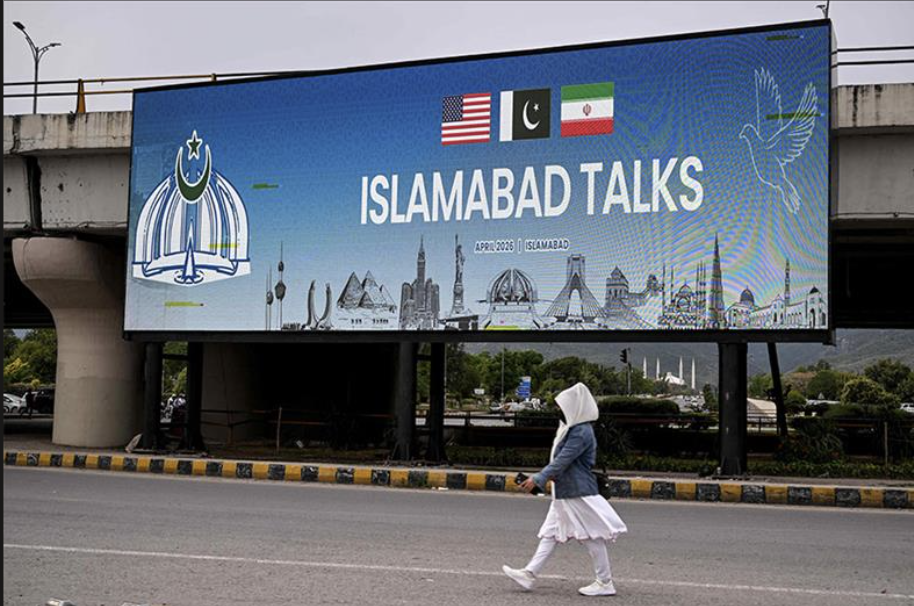
The peace talks were always going to be the only lasting real off-ramp. When they collapsed, both sides stepped back from the table and returned to the logic of coercion. The United States has since threatened a naval blockade of the Strait of Hormuz, targeting traffic entering or leaving Iranian https://time.com/article/2026/04/20/iran-us-peace-talks-stalemate-strait-of-hormuz-trump-threats/ports and coastal areas. What had been a tense but contained confrontation, mediated by airstrikes and back-channel diplomacy, has shifted into something harder to contain. There is now a direct maritime standoff at the chokepoint, through which a significant portion of the world’s energy and trade still passes.
The real issues are simple. Can a blockade be enforced militarily? Is it legal? What happens next to Iran, to the Gulf, and to a global economy that has never fully priced in the possibility that this particular artery could be seriously threatened?
The road to the Strait
The Strait of Hormuz is roughly 33 kilometers wide at its narrowest point and functions as the single most consequential maritime passage on Earth. Oil, liquefied natural gas, fertilizer, food, and consumer goods all move through it. Even a partial disruption sends inflationary waves throughout Europe, Asia, and every economy dependent on dollar-priced commodity markets.
The failed talks broke down over the same unresolved tensions that have defined the U.S.–Iran confrontation for years: nuclear enrichment, sanctions relief, and regional influence. Washington insisted on verifiable restrictions. Tehran insisted on sanctions removal as a precondition, not a reward. Neither side moved, and the ceasefire that had been holding collapsed along with the negotiations.
The blockade threat was expected. Iran had already used the strait as a pressure point, mining shipping lanes, harassing commercial vessels with fast boats and drones, and making periodic declarations about its capacity to close the waterway entirely. The U.S. position is now framed as a response to that pattern: a wartime measure to cut off Iranian war-related imports and exports and ultimately to restore freedom of navigation for everyone else.
That pressure has already started to fluctuate. Following the announcement of a 10-day ceasefire between Israel and Lebanon, Iran said the Strait is open to commercial traffic again, at least for now. The reopening comes with conditions, transit routes set by Iranian authorities, and a clear time limit. It lowers the immediate risk but does not remove it.
Can it actually be enforced?
The U.S. Navy has the capacity to impose a blockade at Iranian port entrances and create real disruption in the short term. Holding control of a busy, politically charged, and genuinely dangerous waterway for months is the real problem.
Iran has invested in asymmetric naval capabilities precisely because it cannot match American surface power conventionally. Mines are cheap and catastrophically effective against commercial shipping. Coastal missile batteries and drone arsenals can threaten vessels that venture too close. Sustaining the naval presence a blockade requires means keeping ships and aircraft on station indefinitely and accepting that some of them will be hit.
Feasible for weeks. Very difficult for months. The longer it runs, the more costly it becomes. That’s where the situation begins to escalate. If the blockade starts to slip, the temptation is to tighten it. Tightening it means more exposure. More exposure creates more opportunities for a serious incident. A U.S. vessel struck or a neutral tanker sinking can turn a pressure campaign into something much larger.
Three legal regimes, three different answers
Hormuz is an international strait. Under Articles 38 and 44 of UNCLOS and established customary law, ships of all states carry a right of transit passage that coastal states cannot hamper or suspend. That provision exists to stop any power from weaponizing a critical waterway. Several maritime law scholars argue that any blockade that deters neutral commercial shipping breaches that rule, regardless of how narrowly Washington defines its targets.
The counter-argument draws on the law of naval warfare. In an international armed conflict, a blockade is a recognized belligerent operation, lawful in principle if it is effective, publicly declared, and impartial. Analysts who accept the legality argument start from the premise that an ongoing armed conflict between the U.S. and Iran activates that framework, permitting measures that would otherwise be prohibited in peacetime. https://www.commondreams.org/opinion/comprehensive-peace-plan-middle-east
Washington’s formulation targets traffic to and from Iranian ports rather than general transit, aiming to thread that needle. Critics call it “selective passage”: a differentiated restriction based on flag or political alignment that does not fit the classical definition of a lawful blockade and looks more like discriminatory interference with neutral trade.
A further problem. Neither the U.S. nor Iran has ratified UNCLOS, yet Washington invokes the transit-passage regime as binding customary law against Tehran while stretching the same framework to justify its measures. That selective reliance on the rules has made third states and legal scholars more skeptical and less willing to extend good faith to contested actions on either side.
The legal debate will not resolve quickly. It does give cover to third parties, China, India, and European states, to challenge the blockade politically without committing to military opposition. That friction puts a limit on how long Washington can hold the line.
Tehran’s likely playbook
Iran’s response will almost certainly be asymmetric. It lacks the naval power to break a U.S. blockade or any strategic interest in an unwinnable direct military confrontation. What it can do is make the blockade expensive, uncertain, and politically unsustainable.
The most plausible moves: missile and drone strikes on U.S. ships, regional bases, or allied Gulf territory; mine-laying to raise insurance costs and slow traffic; strikes on Gulf energy infrastructure in Saudi Arabia or the UAE. That last option is the most escalatory because it pulls in states that have no desire to become battlegrounds in someone else’s war.
Tehran has historically preferred retaliatory measures that signal resolve without triggering uncontrolled escalation, calibrated to impose pain and fracture political coalitions rather than to win a conventional fight. But that logic holds only while leadership sees a way out. If the blockade tightens and no diplomatic exit appears, a larger and less controlled Iranian response becomes more likely.
A global price to pay
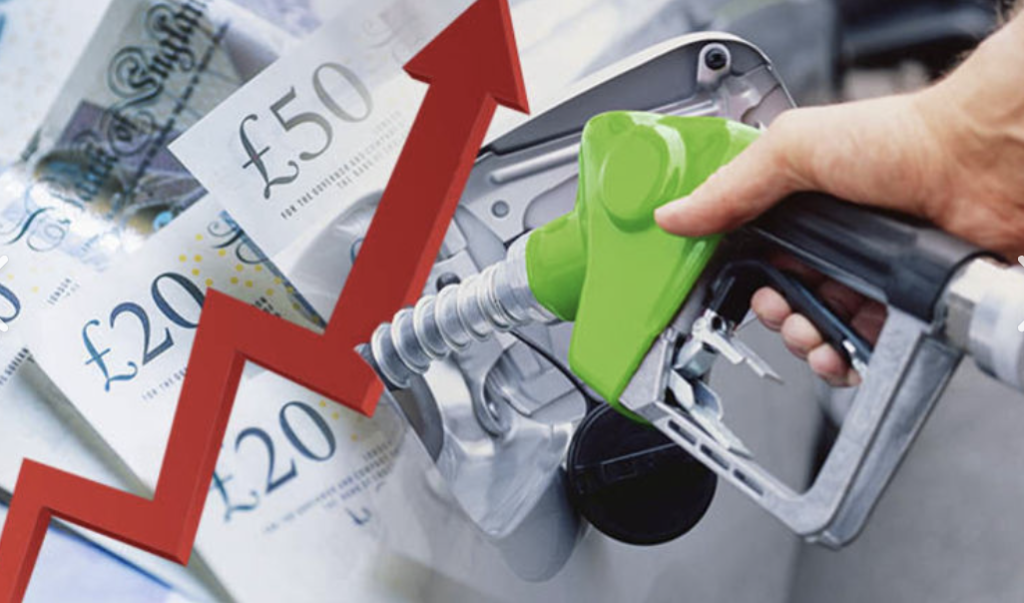
Oil above $100 per barrel is the most visible signal, but it is not the most important one. Hormuz carries fertiliser and food alongside crude. A sustained blockade, or even a sustained threat, raises insurance premiums, reroutes vessels, delays cargo, and adds cost at every stage of supply chains https://www.weforum.org/stories/2026/04/beyond-oil-lng-commodities-impacted-closure-hormuz-strait/ that are already strained. Europe and Asia absorb those costs without any leverage over the confrontation that caused them.
The inflation feedback loop is the real danger. Higher energy prices feed into higher food and goods prices, which in turn feed into central bank tightening, which then feeds into slower growth in already fragile economies. That sequence has played out after every previous Gulf crisis. A Hormuz blockade would run it faster and on a greater scale than almost any precedent.
Gulf states face particular exposure. Saudi Arabia, the UAE, Kuwait, and Qatar all route exports through the strait and hold infrastructure, pipelines, ports, and refineries that are vulnerable to Iranian strikes if the conflict expands. The scenario these governments have spent years trying to avoid, being drawn into a war between two powers they cannot control, is now the one they are staring at.
The spiral nobody wants
The most serious risk is not that the blockade fails. It is that it works well enough to provoke a response that spirals beyond anyone’s control. The current situation is not a stable pressure campaign. It is a ceasefire that has already ended and is now evolving into a different kind of conflict with its own momentum.
Chinese vessels transit Hormuz regularly. Indian tankers do too. A U.S. interception that goes wrong involving either country, a vessel damaged, sailors killed, cargo seized, could pull major powers with no stake in the bilateral confrontation into the crisis. Beijing and New Delhi have both signaled they will not accept interference with their shipping. Neither has any political interest in backing down from that position.
Washington can manage a bilateral confrontation with Iran. Managing one that simultaneously alienates China, strains ties with India, and fractures the coalition of states whose support it needs to sustain pressure over time is far harder. That geopolitical exposure is the blockade’s deepest structural weakness.
Where does it go from here?
What happens next depends on whether either side has a real interest in de-escalation and whether any third party has the credibility to broker one. Neither condition looks favourable. The collapse of the talks removed the most plausible diplomatic mechanism. Qatar, Oman, and Turkey have limited leverage over Washington and are also exposed to Iranian retaliation.
A negotiated settlement in the near term looks unlikely. The more realistic path out is a combination of pressures that make the blockade unsustainable: legal challenges in international forums, economic blowback from allies absorbing costs they did not choose, operational attrition from Iranian harassment, and the difficulty of maintaining domestic political support in the United States for a prolonged naval commitment with no defined endpoint.
History is not encouraging for the side imposing the blockade. Enforcement costs accumulate faster than pressure on the target. Tehran is almost certainly counting on that. The failed peace talks revealed something that has been true for years: there is no middle ground between Washington’s demand for verifiable Iranian concessions and Tehran’s demand for sanctions relief first. The blockade does not resolve that impasse. It makes it pricier to ignore.