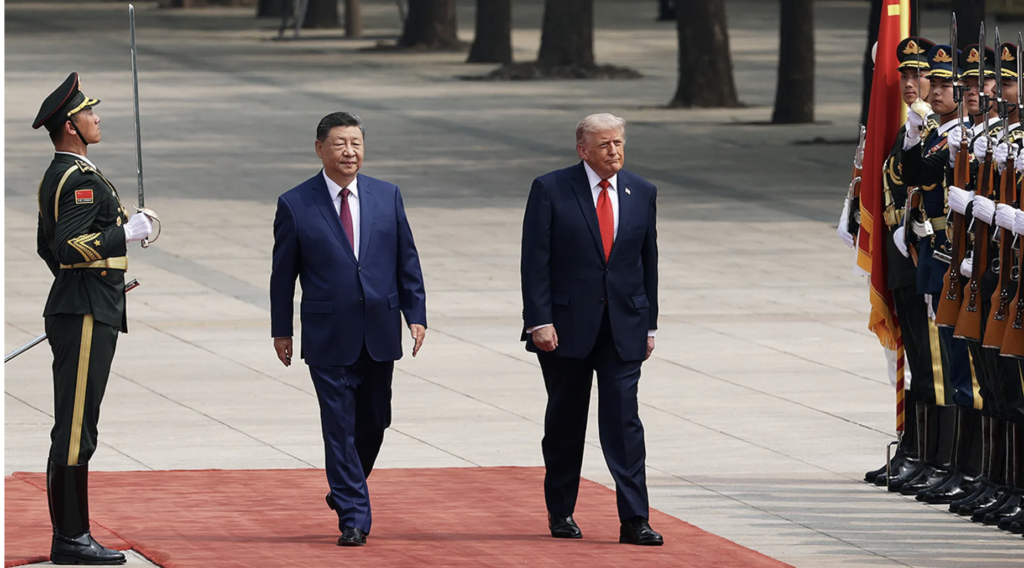
On March 13, 2026, U.S. President Donald Trump landed in China. It was not just another state visit. It marked a diplomatic moment of unusual weight, https://www.bbc.com/news/articles/ceqprgen1nyo , one that may come to define the postliberal era and the fragile architecture of great-power engagement. There is no pretense about shared values. It is about logistics and friction. Container ships idling in the Taiwan Strait and local supply chains fracturing under national security mandates now dictate the limits of statecraft. Behind the closed doors, the discussions are not abstract. They are strategic calculations on how much strain the global architecture can take before a total collapse.
One year after the Busan Precedent engineered a fragile twelve-month truce, Donald Trump and Xi Jinping have met again. But the nature of this summit is entirely different. We are no longer talking about the abstract math of trade deficits. The world has not recovered from Operation Epic Fury. Tensions in the Strait of Hormuz have global energy markets in an effective chokehold. We have entered the era of managed confrontation governed by a brutal paradox: both powers view the other as a systemic threat, yet neither can afford the total collapse of the global system while the Middle East is on fire.
For Washington, the aggressive tariff strategies of the last two years have hit a wall of diminishing returns. The U.S. successfully slashed direct Chinese imports by nearly 20%. What was intended to isolate Beijing ended up having a different effect. Washington’s protectionist turns actually helped solidify a more resilient, https://www.americanprogress.org/article/one-year-after-liberation-day-american-workers-are-feeling-the-negative-effects-of-the-trump-administrations-tariffs/, China-centred trade web across the Global South. As supply chains were rerouted through Latin America and the Middle East, China still posted a 21 per cent jump in global exports in early 2026. The domestic cost for the U.S. has been severe. The massive fiscal burn rate of the war in Iran and a catastrophic 99.4% collapse in LNG shipments to China drove this increase. LNG shipments plummeted from millions of tonnes to a token 26,000 tonnes. U.S. inflation has spiked to a destabilizing 3.8%.
To stabilise this shredded commercial foundation, Treasury Secretary Scott Bessent has pitched a formal board of trade and a parallel board of investment. These are intended as institutional shock absorbers, designed to catch and contain disputes before they trigger retaliatory spirals. The path forward splits into two distinct strategic options:
- The Grand Bargain: This means completely removing the current 145% tariffs in exchange for strong intellectual property protections and a U.S. rule that bars goods linked to intellectual property theft.
- Incrementalism: A tactical focus on the existing Busan commitments, lock-stepping China’s purchase of 25 million metric tons of soybeans annually through 2028, and immediately restarting U.S. LNG terminals for Chinese buyers.
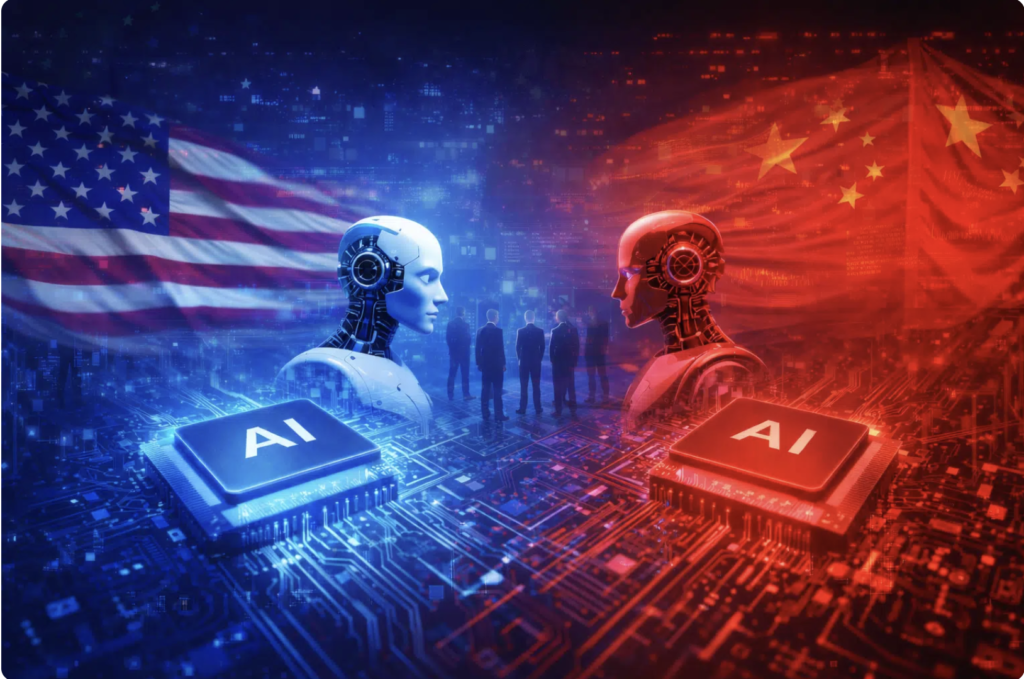
Beyond energy and agriculture lies a deeper, more volatile threshold: the weaponization of artificial intelligence, https://www.abacusnews.com/ai-arms-race-why-china-still-trails-the-u-s-and-what-that-means-for-tech-leadership/ . In 2026, AI is no longer a commercial frontier but a primary engine of strategic power. The rise of deepfakes and the use of autonomous systems in military command structures have created a serious threat of “safety arbitrage,” in which state and non-state actors exploit weak regulatory environments to deploy harmful models. To avoid an accidental spiral of escalation, negotiators are drafting a co-risk bearer framework anchored in three concrete pillars: shared safety guidelines to establish nonbinding thresholds for chemical, biological, and cyberwarfare support; an AI emergency hotline to enable immediate attribution during live automated attacks; and tightly restricted telemetry sharing aimed at tracking malicious activity by non-state networks. This tension is anchored in the hard consensus that nuclear launch authority must remain strictly in human hands. Both leaders want to expand this bilateral understanding into a multilateral framework through the UN. The alternative is letting the AI-nuclear nexus slide into a catastrophe that no one can code their way out of.
Operation Epic Fury has warped the geographic distribution of power. Washington’s choice to strip air and missile defense batteries from South Korea to enforce the Iranian blockade has exposed a distinct security vacuum in the Pacific. China has stepped directly into this vacuum with what diplomats are calling the “Iran Lever.” As the main buyer of crude from Iran, Beijing has significant economic influence over Tehran. It can restrict dual-use tech exports to Iran, but it will demand huge American concessions on Taiwan in return.
On Taiwan, Beijing wants a rhetorical upgrade. They are pushing Trump to move from the traditional formula of “not supporting” independence to an explicit policy of “opposing” it. Washington has spent decades resisting this phrasing. Today, the fiscal bleeding of the Iran war and the desperate need for Chinese cooperation to reopen the Strait of Hormuz have brought that structural concession directly to the bargaining table.
A Landscape of Strategic Hedging
The 2026 summit cements the reality of competitive coexistence. The institutional authority of the UN and the WTO is largely spent. Global rules are now written in bilateral, transactional rooms. Middle powers across ASEAN and the Global South have adapted by practising aggressive strategic hedging, refusing to pledge fealty to either capital and instead capturing economic rent from the friction between them.
Even in a fractured global order, the planet does not negotiate with politics. Its systems stay coupled, indifferent to rivalry. Climate stability isn’t something that just happens on its own. It relies on shared computational models that constantly track extreme weather patterns across borders and entire continents, almost like a collective early radar for the planet. Public health rests on a similar backbone, relying on early-warning systems that can detect dangerous pathogens in time, before they slip through containment and spread quietly. Agriculture, though, plays by a different set of rules altogether. It is faster, harsher, and far less forgiving, where delays don’t just matter; they decide outcomes. It depends on rapid, cross-border data flows to soften the impact of recurring shocks across already strained supply chains.
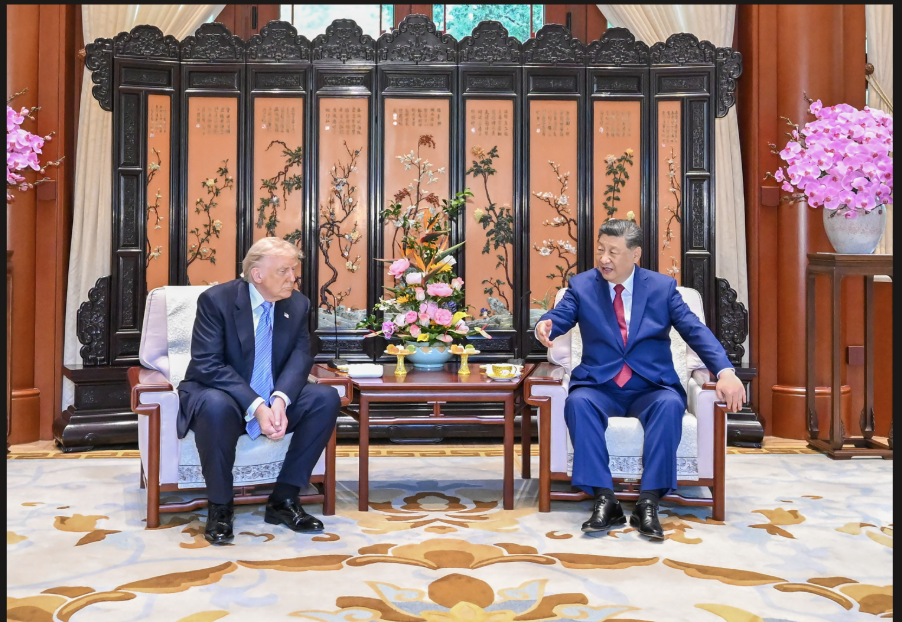
The U.S.–China relationship has settled into something more structural than cyclical. It is not a phase, but a condition. The Beijing summit won’t unwind that reality. At best, it sketches a minimal framework that prevents the rivalry from collapsing the wider system it sits inside. That framework is less polished architecture and more a practical arrangement of structural compromises i.e. messy, https://warontherocks.com/trumps-visit-to-china-wont-fix-much-if-it-even-happens/ functional, and built to hold under pressure. It begins with the Korean Peninsula. A U.S. special envoy would need steady, direct channels with Beijing, not for big, sweeping deals, but for something more basic and immediate, such as keeping tensions from flaring and managing risks as they come. From there, attention shifts to the financial system. We need strong safeguards to handle sudden swings in digital assets so those shocks don’t spread into the wider economy and cause bigger instability. Then there’s AI. The U.S. and China would also have to get closer on risks that don’t come from states at all, especially where cyber tools can connect with biological systems in dangerous ways. And then there is the Busan agreement: it cannot be left to drift. It needs to be locked into a standing review mechanism, one designed to prevent tariff escalation or quietly resurfacing through procedural expiry or the slow erosion that comes with institutional fatigue.
Conclusion
The Beijing Summit is unlikely to be remembered as a reset, but rather as the moment when a rivalry became formally structured. The proposed “Board of Trade” and “Board of Investment” aren’t about rebuilding trust; they are practical guardrails meant to stop things from spiralling when tensions rise. The bigger question remains. Can the two superpowers still discover a workable way to live with each other’s power without tipping the balance into collapse?