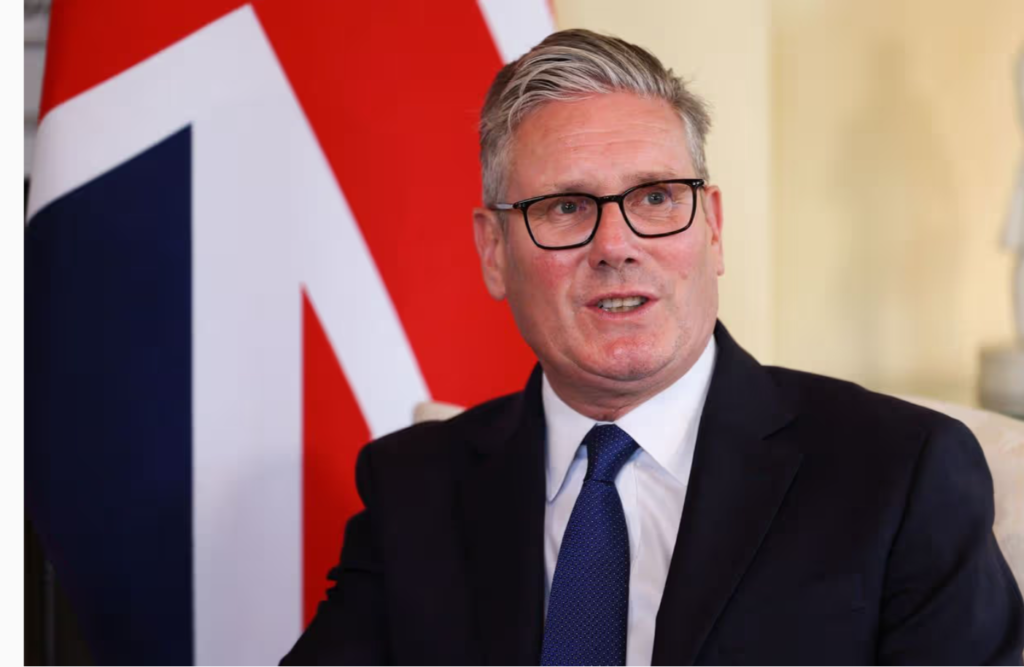
On the morning of Monday, 22 June 2026, Keir Starmer stood outside 10 Downing Street and delivered the speech https://edition.cnn.com/2026/06/22/world/live-news/keir-starmer-uk-pm that many in his own party had been willing into existence for months. His voice broke. He thanked his wife. He spoke of being “the best husband” and “the best dad.” It was, by several accounts, the most human anyone had ever seen him. But, as most analysts agree, it was also far too late.
Less than two years into a premiership that had begun with a landslide majority of 172 seats, Starmer had become one of Britain’s most unpopular prime ministers, with some polls drawing comparisons to Liz Truss. The man who had rescued the Labour Party from the wreckage of the Corbyn years, who had dragged it back from “political, financial, and moral bankruptcy,” as he himself put it, had been consumed by the very office he had spent a decade earning the right to occupy.
How did it come to this?
The Original Sins
There is no shortage of candidates at the moment when everything started to go wrong. The winter fuel allowance cut, sprung on the public without a manifesto warning, is frequently cited as “the original sin,” a word-for-word phrase that has since become standard currency in Westminster post-mortems. Then came the botched welfare reforms. Then the free glasses. Then the spectacles affair morphed into something more damaging: a pattern of U-turns, reversals, and improvisations that gave the impression of a government that had arrived in power without knowing what https://www.bbc.com/pidgin/articles/c70y8z2re42oit wanted to do there.
By September 2025, only 14% of people approved of the government’s record, while 69% disapproved. Roughly two-thirds of Britons believed Labour was out of touch, unclear on what it stood for, weak, and untrustworthy. Those are not just bad polling numbers; they are a near-total collapse of public legitimacy.
The Mandelson affair accelerated the rot. In September 2025, the release of the Epstein files widely revealed the extent of Peter Mandelson’s relationship with convicted child sex offender Jeffrey Epstein. Starmer dismissed Mandelson, saying he regretted appointing him. His chief of staff, Morgan McSweeney, took responsibility for the appointment and resigned in February 2026. The episode was doubly damaging: it raised questions about the government’s judgment, and it robbed Starmer of the strategist who had served as its ideological compass, or, depending on your view, its ventriloquist.
A Man Without a Project
The deeper problem, argued in the documents shared for this piece, was not any single policy failure but something more fundamental: Starmer could never explain why he wanted to be prime minister.
One analysis describes it as the absence of an “irreducible core,” no governing project around which Whitehall could orient itself, and no prospectus the electorate could vote for or against. It left him, in the memorable phrase of his own exasperated officials, the “ditherer-in-chief.” He had suppressed his genuine liberal instincts, a commitment to children’s life chances, and a belief in human rights because his strategists told him they weren’t vote-winners in the seats Labour needed to hold. So he read speeches he didn’t believe in, including one suggesting that Britain was becoming “an island of strangers.” He was told it was what he had to say. The electorate, with its unerring instinct for inauthenticity, concluded that he didn’t mean any of it.
The result was a government defined, in the words of one account, by incrementalism, “because it did not dare to press ahead with transformatory change in so many areas, from welfare reform to social care, education or digital ID.” There was plenty of analysis about the past. There was no prospectus for the future.
The Numbers Don’t Lie
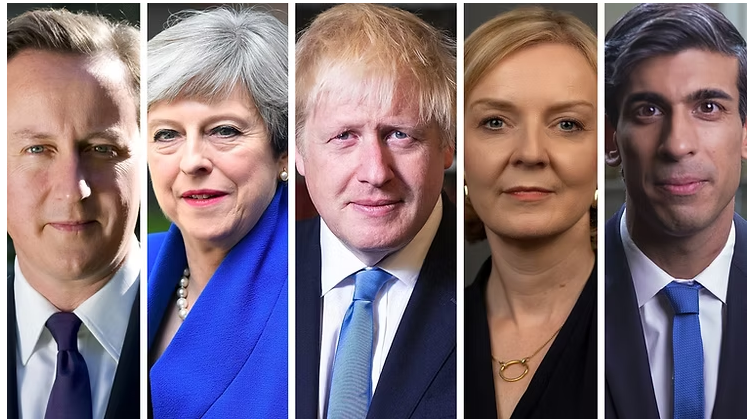
By January 2026, YouGov estimated that 75% of people had an unfavourable opinion of Starmer, a net favourability rating of −57, matched https://yougov.com/en-gb/articles/53825-how-would-britons-feel-about-potential-electoral-coalitions-january-2026 only by Truss. And yet, unlike Truss, he hadn’t crashed anything. He hadn’t held parties during lockdown like Boris Johnson and hadn’t accepted millions from foreign-based donors like Nigel Farage. His government had delivered genuine improvements on NHS waiting lists, increased defence spending, and reduced undocumented migration. The tragedy of his premiership, in a sense, is that competence proved entirely insufficient for the moment.
Labour lost control of 35 councils and nearly 1,500 councillors in the 2026 local elections. The BBC’s projected national vote share put Labour at just 17%, in joint third with the Conservatives, down nearly half from the 2024 general election. Wales, a Labour stronghold for a century, fell. Welsh Labour suffered a massive defeat, ending 100 years of Labour control and relegating it to third place behind Plaid Cymru and Reform UK.
By mid-May 2026, over 95 Labour MPs had called on Starmer to resign or set out a timetable for his departure. One cabinet minister — Health Secretary Wes Streeting — and four junior ministers had resigned in protest. Then the defence spending row opened up a new front: three further resignations from the Ministry of Defence followed, including Defence Secretary John Healey.
The end came, as these things often do in British politics, not in a blaze but in a by-election. Labour MP Josh Simons resigned from the Makerfield seat in a coordinated move to allow Andy Burnham, the Greater Manchester mayor, to stand. Burnham won decisively with 54.8% of the vote, defeating Reform in a seat where the party had recently taken all local council seats. It was, as one commentator put it, “a rare by-election swing toward the governing party” but it was a swing toward Burnham specifically, not toward Starmer, and everyone in Westminster understood the difference. When Starmer canvassed senior cabinet colleagues over the weekend, more than half a dozen told him it was game over.
What It Means for Labour
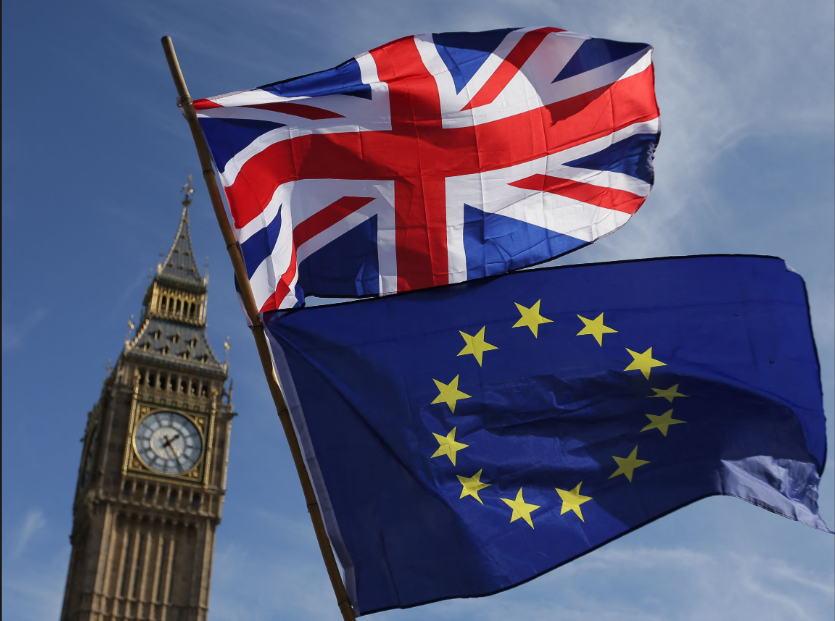
Starmer’s resignation marks the UK’s seventh change of prime minister since 2016. That is a rate of turnover not seen in Britain for nearly two centuries, and it points to something deeper than any individual failure. John McTernan, former political secretary to Tony Blair, argued that Britain is in “the period in which it has done the most harm to itself, by leaving the European Union,” compounding the damage of the 2008 financial crisis and producing an environment in which no prime minister could easily thrive.
And yet that structural context does not fully excuse what happened on Starmer’s watch. The party he leaves behind is fractured in ways that go beyond the usual left-right tensions. Starmer’s departure brings three questions together that
Labor has yet to answer: Can it hold metropolitan progressives and working-class Brexit seats simultaneously? Can Britain rebuild economic ties with Europe without reigniting the culture war over Brexit? And can it remain a credible US ally while its military commitments, industrial base and public finances all come under pressure?
These are not questions any new leader can answer with a change of tone or a better backstory. They require hard choices, and hard choices require an agenda
— the very thing, as one former cabinet minister noted in these pages, that Starmer conspicuously lacked when he walked through the door of Number 10.
The Economy He Leaves Behind
The economic inheritance for whoever follows is genuinely bleak, though not catastrophically so. GDP rose 0.7% in the three months to April and 0.6% in Q1, while the OECD forecasts only 0.9% growth in 2026 and 1.1% in 2027. Slow, anemic growth, the kind that feels like stagnation in the cost-of-living crisis, with CPI inflation at 2.8% in May, with services inflation rising from 3.2% to 3.7%. The fiscal rules Rachel Reeves implemented, committing the government to spending less than it borrows, leave the next prime minister with almost no room to manoeuvre.
Burnham has already diluted his earlier criticism of the fiscal rules after “some jitters in the financial market,” suggesting that whoever leads Labour will face the same invisible constraint Starmer faced a bond market that punishes ambition and an electorate that punishes timidity.
The Burnham Question
As of Monday lunchtime, Burnham was the only candidate to have publicly declared for the Labour leadership. Even potential rival Wes Streeting backed him. The Makerfield result gives him momentum rare for a leadership contender to bring, and his personal numbers are markedly better than Starmer’s ever were. Ipsos found that two-thirds of Britons thought Starmer should not lead Labour into the next election, while Burnham was the preferred replacement. Voters were more likely to see him as likeable, in touch, and clear.
But the challenges are structural, not personal. If he tacks too far right on immigration, https://www.theguardian.com/uk/immigrationBurnham risks losing Labour’s progressive, graduate base to the Green Party. If he tacks too far left, he risks alienating the traditional working-class base that Reform is actively poaching. He is, in other words, navigating the same impossible geometry that destroyed his predecessor, only with more warmth and a northern accent.
Some critics are already skeptical that warmth is enough. Economist Richard Murphy, writing before Starmer’s resignation, argued that Burnham’s economic platform, which promotes public ownership, reindustrialisation, and regional devolution, is just a rebranding of the existing settlement and not a real alternative, limited from the start by fiscal rules and the City’s unspoken veto.
The Eurasia Group predicts Burnham will take office around July 18 or 19, five days ahead of a scheduled UK-EU summit, which lends the moment political symbolism of a reset, even if the substance of any rapprochement will take years to negotiate.
The Longer View
There is something both poignant and cautionary about Keir Starmer’s tenure. He was, by conventional metrics, a serious man who wanted to do serious things. He had a compelling personal story, a first-generation university student, the child who spent hours at his mother’s hospital bed, but he could never bring himself to use it. Those who know him suggest he felt guilty about his success, that his father’s admonitions not to consider himself better than his siblings had taught him to suppress his emotions. The result was a prime minister who felt nothing in public until the moment he resigned.
In the end, a former cabinet minister put it with unvarnished directness: “We can’t have a repeat of a labour prime minister walking in through the door of No. 10 without an agenda or a plan. That’s what happened last time with Keir, and it would be fatal for the Labour Party.”
For Andy Burnham, the lesson is clear. He will walk into Downing Street next month as an insurgent, a man who defeated Reform in their own backyard, and a politician who appears to understand what the country is asking for. The moment he crosses that threshold, the clock starts. Hope, as the documents pasted here note, will rapidly turn to disappointment if he fails to deliver genuine, tangible change.
Britain has had seven prime ministers in ten years. It cannot afford an eighth who arrives without knowing what he came to do.